I used to love growing a garden and in the early 80’s I would read lots of books on organic gardening. Words like ‘crop rotation’ ‘leguminous crops’ were phrases that would keep coming up. So I started growing peas and beans in one spot and the next year I would plant heavy feeders like tomatoes in that area. The books were telling me that I was enriching the soil with nitrogen salts with these leguminous plants (like peas and beans) and was creating a natural fertilizer for the subsequent year to plant tomato seedlings in that area.
Nitrogen is plentiful in the atmosphere as elemental nitrogen and is almost 80% of the air around us. As an element it is colorless and odorless and is not too reactive. It was discovered almost at the end of the 18th century by Daniel Rutherford (and independently by others such as Priestly and Cavendish). Rutherford was able to remove oxygen and carbon dioxide from a contained tube full of air and he demonstrated that the residual gas did not support combustion.(Ref.1)
Nitrogen is the 7th element in the Periodic Table and has three electrons in its 2p shell. This means that nitrogen has the ability to form triple bonds (six electrons sharing) with itself and with other elements. Consequently,nitrogen compounds have a lot of energy. A hundred years ago not much was known about nitrogen, but today it has several biochemical and industrial applications. It is used mainly to preserve food and in the production of fertilizers.(Ref.1) Nitrogen does not burn, nor support combustion and is slightly soluble in water. This gas is fairly un-reactive while its compounds are more reactive.(Ref.2)
There are basically three oxides of nitrogen, nitrous oxide N2O,which is used as an anaesthetic, NO,which is nitrogen oxide, used in the production of sulfuric acid and NO2 which is nitrogen dioxide found as an air pollutant.(Week28) The important compounds of nitrogen are ammonia, nitric acid and cyanides.(Ref.2)
One of the most important needs for nitrogen is in biological processes. All organisms need mineral nutrients for growth and nitrogen is essential here and is required in large amounts for proteins, nucleic acids and cellular components.(Ref.3) Amino acids are the smallest units of proteins and are organic acids with amine(a nitrogen atom with two hydrogen atoms) groups in them. Some of these amino acids are essential in the functioning of a lot of activities in our body. The Nitrogen Cycle explains how leguminous plants( beans, soybeans, peas) add fertilizer to the land. Some bacteria/microbes that reside in the nodules of the roots of these plants can convert atmospheric nitrogen to ammonium or nitrate ions. These are called ‘nitrogen-fixing’ bacteria that create fertilizers using atmospheric nitrogen. Then other bacteria and fungi convert the decaying organic matter to release atmospheric nitrogen once again to repeat the cycle.(Ref.3)
Nitrogen, a colorless odorless gas, has been shown to be invaluable in our very existence. Perhaps the fact that there is so much of it present in our air should have given us a clue about its importance!
Activities for Middle School Teachers
Study the Nitrogen Cycle and other cycles, what do they teach the students?
Let the teacher illustrate the uses of liquid nitrogen to study its effects on different objects. What are its uses in industry?
Study the essential and non-essential amino acids; what roles do they play?
Create their structures using model kits or marshmallows, toothpicks, raisins etc.
Nuggets of Information
The French chemist Lavoisier, named nitrogen “azote” meaning “without life”.(Ref.3)
About 2.5 % of the weight of living organisms comes from nitrogen in organic molecules.(Ref.4)
In the body, it is the 4th most abundant element.(Ref.4)
Nitrogen is the seventh most abundant element in the universe.(Ref.3)
Nitroglycerin is a nitrogen containing compound and can be used for relief of angina, a life threatening heart condition.(Ref.4)
In 1919, the world learned for the first time that atomic nuclei could be disintegrated. Ernest Rutherford reported that he had bombarded nitrogen gas with alpha-particles (helium nuclei) and found hydrogen was produced.(Ref.4)
The universe’s nitrogen was made, and is being made, by the CNO cycle in stars heavier than our sun. What exactly is the CNO cycle? When the universe was first formed following the ‘big-bang theory’, there was hydrogen, helium and a tiny amount of lithium. Helium ions bombarded the nucleus of these early elements to form carbon 12 which got bombarded to form the heavier nitrogen atom and the oxygen atom. These nuclear reactions leading to the formation of the different elements carbon, nitrogen and oxygen in the Periodic Table, is called the CNO Cycle. (Ref.4)
Sodium and potassium nitrates are formed during the decomposition of organic matter. They are called salt-peters and are found in dry areas of the world and are used as natural fertilizers.(Ref.3)
The Haber Process:Methane reacts with steam to get hydrogen; this hydrogen reacts with nitrogen in the Haber Process to form ammonia. Liquid ammonia/ ammonium ions are used as nitrogen fertilizers. Ammonia is the starting point for making many important nitrogen compounds and so the Haber Process is significant.(Ref.3)
Excess nitrogen in the atmosphere leads to eutrophication, toxic algae blooms, acid rain and also global warming.(Ref.3)
If nitrates get into groundwater that is used for drinking, it causes toxicity for newborns, a condition called anoxia, which leads to suffocation. This is also termed Blue Baby Syndrome.(Ref.3)
References:
1.http://chemwiki.ucdavis.edu/Core/Inorganic_Chemistry/Descriptive_Chemistry/Elements_Organized_by_Block/2_pBlock_Elements/Group_15%3A_The_Nitrogen_Family/Chemistry_of_Nitrogen
2.http://encyclopedia2.thefreedictionary.com/Nitrogen+compounds
3.http://www.eoearth.org/view/article/154862/
4.http://www.chemicool.com/elements/nitrogen.html
Science Makes Sense-Week 29: Nitrogen, fertilizers, Haber Process.
March 29, 2015Chennai music scene
December 24, 2014I have been in my hometown,Chennai , India and after fighting jet lag and a horrible cold, started attending South Indian classical music.Chennai is a haven for all kinds of music and in December, the music halls ( more than twenty ) conduct mostlySouth Indian vocal and some instrumental music. This is our Vienna, a veritable feast for the ears and soul, scintillating yet overwhelming.Since I have been attending the concerts for more than twenty years, I do not rush headlong into ‘sabhas'( places where the concerts are held) and listen to many artists each day almost like walking into a wholesale market the first time and buying everything one sees. No, no, I pace myself and pick and choose a few.
Yesterday,thanks to my husband,we went to a mandolin concert conducted by a duo, not all that well-known. I was dismayed to see the hall almost empty of people but filled with mosquitos. But what a pleasant surprise to spend two and a half hours listening to some dexterous artists playing melodious music (while I scratch my arms and legs blissfully battling the bloodthirsty pests! ) Who are these unknown artists, plying this rare instrument played till recently by a bright young star called U Srinivas who died so soon? Why don’t more people attend this?
Funnily enough,the local paper, The Hindu, had an article about flautists being ignored while vocalists are encouraged to perform. In essence, the article lamented the lack of variety in the Carnatic music scene.People flock to hear the vocalists sing and there is no doubt that many deserve the crowds and adulation since they are talented, demonstrate their mastery of the raaga ( the placements of notes in a particular order) and taala ( beat and rhythm). But does that mean we ignore these budding and accomplished artists who play several different instruments? Is the audience following the ‘rage of’ the year’ artist/ artists?
Music should encompass all forms and the December Carnatic music season organizers should make a special effort to bring in more instrumentalists. We are losing out on the rich heritage with just vocalists taking the main stage.
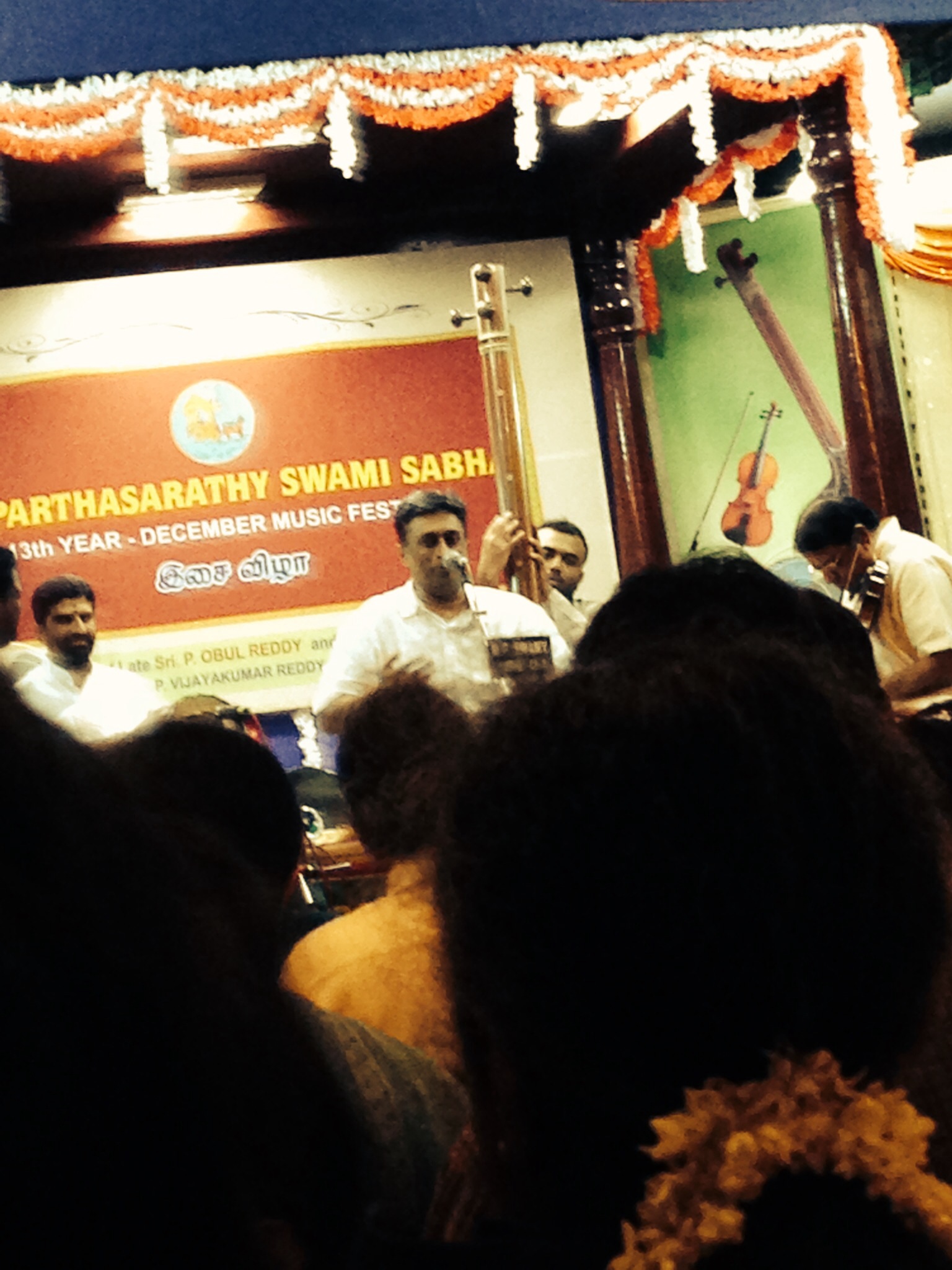
Amazing vocalists at a ‘Sabha’
Summer is crazy!!
July 6, 2014People always say that summer is a fun time. I am ambivalent about the advantages of summer. On the one hand I find I have time to read outside, do a lot of gardening but I also get bogged down with family and visitors. The grandchildren are visiting now from Europe and I enjoy their company. But it also means that I have less time to dream and write.
Women as a rule are dragged into things they may not want to do and I have found that I have to deliberately lay down some time for myself without sounding too selfish. Stop right there woman! “Selfish?” Why do I use that adjective to describe any time that I want to spend for myself? Is it because my community, my history, my culture tells me that I should be always ready to give, give , give? And the moment I say, ” Sorry I cannot babysit this weekend, since I have something else going on.” why do I feel a twinge of guilt ?
Over the years, it has been easier and easier to be assertive about my needs and not feel bad about it. My children are getting more sensitive about my space and my time and always ask me if I am free to take care of their children, run any errands for them. Even my husband is getting to see the light and does not invite friends without checking with me or saying,” We can take them out, you don’t have to cook this time.”
It did not come overnight, but I had to state what I wanted. And in summer especially, when everyone is outside and the city is crowded with outside visitors I am trying not to grit my teeth and wait for the cooler months and quiet time. I am trying to pace myself and enjoy all the extra running around. I am thinking of taking the grandchildren to the zoo, museum, spend time teaching them math, English and geography and have fun doing all this.
I also have to be honest about my writing. Even if I am alone and have all the time in the world, I find excuses not to write! I would rather curl up with a book than sit down and do the hard work of finishing half- written novels and short stories. So meanwhile, let me relax and do other activities and still discipline myself to write a little and not blame summer for my inertia.
Cambodia travels:On the road to Siem Reap and more..
May 3, 2013The ride to Siem Reap is along the Tonle Sap river and would end up close to the Tonle Sap Lake. We are going northwest. Battambang, considered to the ‘colonial gem’ of Cambodia (and once a part of Thailand) is further west and south west of Siem Reap.”Seim Reap” in Khmer means Siam defeated, and Siam was the old name for Thailand!Apparently Thailand wanted to claim the Angkor Wat temples as theirs. It is amazing that such a name has survived all these years.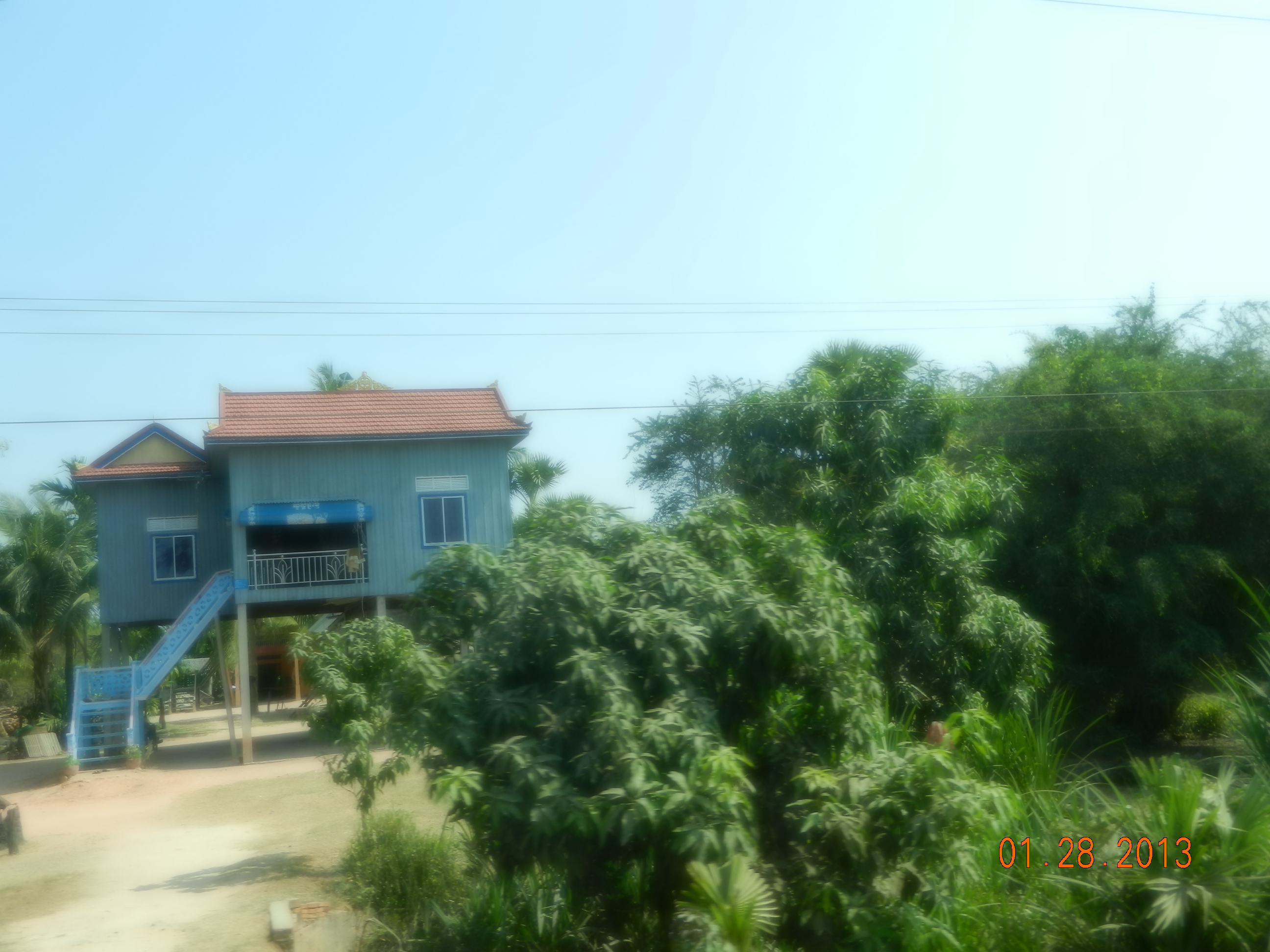
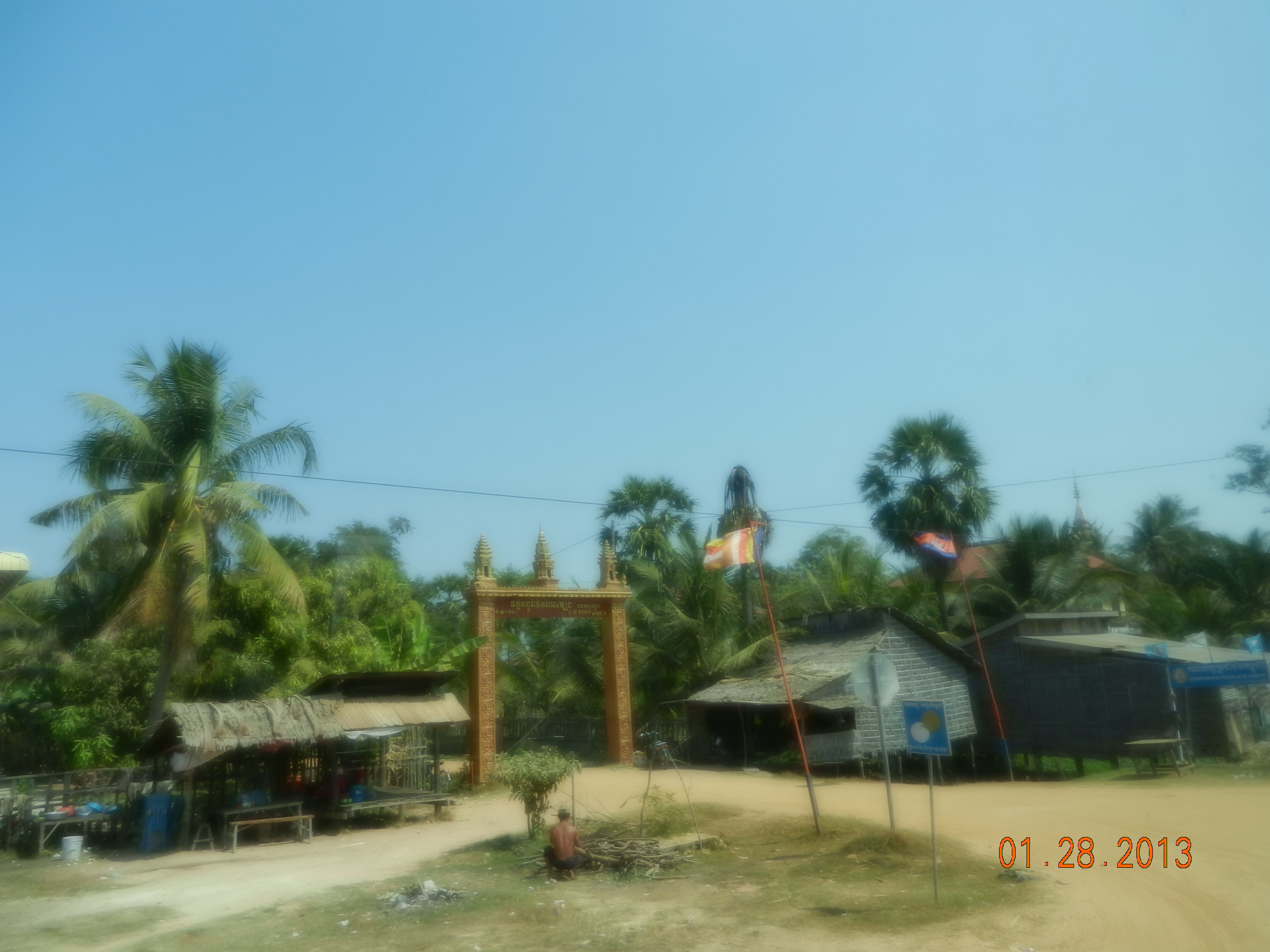
 After the initial stoppings to eat and shop or use the restrooms, the bus driver keeps on driving and I am eager to look in my tour guide book to place where we are on the map. The whole bus is nodding off but I am not sleepy. I decide to look outside. I notice houses on stilts and ask Sol about it. “We have very heavy rains here and the land gets flooded, so people here build their houses so it is high off the ground” he says. I notice something else that is quite charming. Every village we pass has an entrance like a gateway. Some are more elaborate than others. The Cambodians like to adorn their small quiet villages. I love looking outside and watching the people and their world. I am reminded of parts of India, especially rural India.We pass a big city, Kompong Khleang with shops and automotive repair shops and lots and lots of cement and clay figurines. I see signs for Dam Dek and know we are close to our destination.
Soon we are speeding through the city and outside the city limits we get to our hotel, The Frangipani. Sol gives us an hour to check in and says he will be back to take us to one of the temple complexes today. The hotel has a beautiful garden and we slowly trudge our way to the rooms and deposit the luggage. The sun is bright and I feel warm and sleepy.
Cambodia travels: Le Lotus Blanc and on the road to Siem Reap
April 25, 2013


 That afternoon we stop at Le Lotus Blanc (The White Lotus) for lunch. This is an NGO run by the French and has a store as well where they sell products like clothes,bags made by destitute children and some of their parents. We are requested to first go to the store area and watch a video. After the genocide, when several charitable organizations entered the country in the early 80s, they found children living on trash heaps. Some of these children were rescued by a French NGO called Pour un Sourire d’Enfant ( For the smile of a child) and this center was started where the children were sent to school and also trained to work in the adjoining restaurant. I look at the bags and scarves and pick up a few; one of my cousins buys an outfit for her daughter. After half an hour we walk to the restaurant next door. The whole place looks beautiful with a lovely garden and blooming flowers outside.
This is another beautiful sunny day and the smiling faces of the young gentlemen serving us lunch warms us up. The morning mood slowly lifts from our faces. First they serve us a thick squash soup and follow it up with some excellent fish with vegetables. The young servers speak halting English but their smiles and demeanor win us over. We hang around in the gardens after eating and then it is time to get back to our hotel.
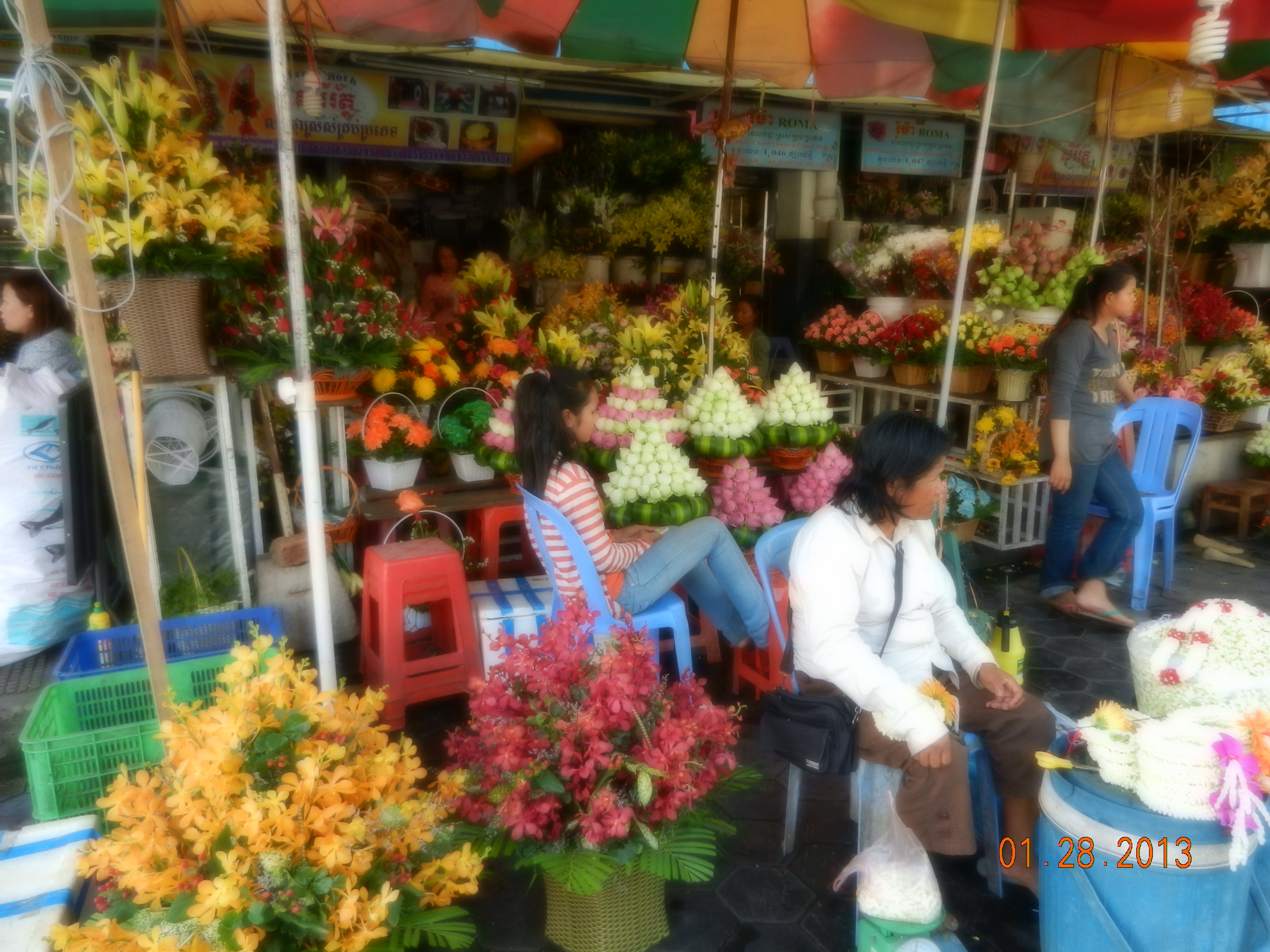
Today will be our last day here and then we leave early morning for Siem Reap to see the famous Angkor Wat temples. We rest for awhile and then the avid shoppers want to spend time looking around. So we all go to the central market area in the tuk tuks. I am struck by the beautiful flowers in the market area and we walk around. I find another NGO shop selling stuffed animals made out of cloth. I buy a cute looking rat and my cousin buys an octopus. We decide to have a simple dinner at one of the riverfront cafes. Lunch was heavy so a simple soup is enough and we go back to the hotel.
Early morning, Sol is ready with the van and driver. We have a quick breakfast, check out of the hotel and get on the road. We stop first to buy, corn and a lovely purple fruit called milk fruit. The vendors are right on the side of the road, like they sell in India and Sri Lanka. One of my cousins has an endless supply of snacks so with the fruit , corn and snacks we fill ourselves. We stop at a big shopping open market to use the restrooms. I am shocked and fascinated to see the women selling spiced and fried insects! The are also selling big sized melons that look like overgrown cucumbers.We pick up some pineapple and coconut water and get back on the road.
Cambodia travels: the killing fields
April 16, 2013
 After the boat ride it is time to get back to the hotel where one of my cousins, Meena, has just arrived to join us. She is tired and needs to eat something so the two of us come down for lunch.( actually a second lunch for me!) We eat this amazing soup, she has a vegetable soup and I have one with shrimp, unbelievable! I feel I can live here just for the food and keep gaining weight as well.
Meena is a shopper and she leaves with the others while I read a book in my room. Some have gone shopping and two have gone for massages. Apparently, massages are very popular tourist draws here. I come down to see this straight-backed woman playing a lute-like instrument in the lobby. She seems to be playing it in a minor scale and sounds sad . But her face is expressionless and rigid. I think she has been there for several hours, how boring and tiring for her ( and for some of us!)
We have decided to eat out tonight. We take the tuk tuks which look very different from the three-wheelers called autos in India. Here you have two wooden planks with cushions facing each other, so four people can sit comfortably. One of my cousins walks slowly since his accident several years ago and he accompanies us in the tuk-tuk. We go to a place called The cantina and have authentic, home-made Mexican food. The tostadas look like they were hand-made and the cheese, though not Mexican, is light The tostada is loaded with lots of cole slaw and a lovely verde and hot sauce. With drinks the bill comes to less than $25! Now my whole family decides they can live in this country.
The next morning Sol says we are going to see the killing fields and the Tuol Sleng museum. I brace myself for the horrors that started the1975 genocide in Cambodia. We first go to the museum, which was once a school and was later converted into a holding place for Cambodians during the Khmer Rouge days. Each room has an iron bed with hooks to hold the prisoners. There is nothing else in each room and Sol talks about how they were treated. Anybody who was educated, or wore glasses were taken in as enemies of the state, tortured and later killed. There are huge poles outside where men were swung around as part of the torture. We move along silently. There are rooms with pictures of some of the people. It is bizarre to note that the perpetrators of this genocide kept records of all this! There are several pictures of men and women. Some managed to survive and one of them has written a book which has been translated to English/French. I buy his book. Nobody talks as we get back to the van to the killing fields. later Sol tells me that some of his family members were killed too.
We are taken to one of the killing fields . ( I remember seeing a 1984 movie called The killing fields that outlines the whole Khmer Rouge killings that started in 1975 and went on for about four years.) We see trees, glass cases filled with old clothes, hollow pits and a certain kind of palm tree. The tourists in this area are mostly adults who just stand and stare or sit in benches and close their eyes. Sol softly states,” These palm tree leaves were used to beat the people senseless and then they were killed. To drown the shouts of the people crying in pain they had loudspeakers piping in music. ” Now I know why people are meditating, or sitting in silence thinking about all that here. There is a pagoda-like structure that has glass shelves with human skulls . I go in to see skulls of all ages, yes women, children and men were massacred. What makes us humans do these horrific acts of violence?
A sombre mood prevails us as we get back into the bus.
Cambodia travels: boat ride on Tonle Sap
April 13, 2013


 If you look at a map of Cambodia you see two major rivers : one is the Mekong and the other is Tonle Sap. In fact, the river Tonle Sap near Phnom Penh becomes a mighty lake before you get to Siem Reap where the famous Angkor Wat temples are located. Sol decides to take us on a boat ride on the Tonle Sap River the second day. We see the breakfast area crowded with tourists from Australia, Europe and parts of Asia. We wait till the crowds thin down to find tables to sit at. After breakfast, we all wait outside where I see something quite private. A young child and adult bow to a monk who is blessing them. It is not something I would see openly in the streets of India. Sol comes in the van to take us and I remember the expression for good morning so I say to him and the driver, Arun sus dei. They grin back to acknowledge the greeting.
“We will pick up our lunch from the same restaurant and take the boat right there” says Sol. It is a beautiful sunny day and we walk into the restaurant that looks so different in daylight. The lunch is packed not in plastic containers, but in straw baskets! The containers look so beautiful, some of us want to carry them back to India. Sol and the driver help bring it all to the boat as we get in. The boat has a lower and upper deck with chairs and we all pile in and sit down. Some of my cousins take out their i-pads to play Scrabble. Some want to climb to the upper deck. I just want to laze around and see the shore as we take off.
We see areas in the water with plastic bottles and realize that these are nets with floaters to mark boundaries where people are fishing for fish, shrimp and other sea creatures. People , young and old seem at ease moving around in water. The houses along the shore look modest dotted with a few temples here and there.I see a mosque and realize there is a small percentage of Muslims here. The breakfast, the sun makes us all sleepy and we nod off for an hour….
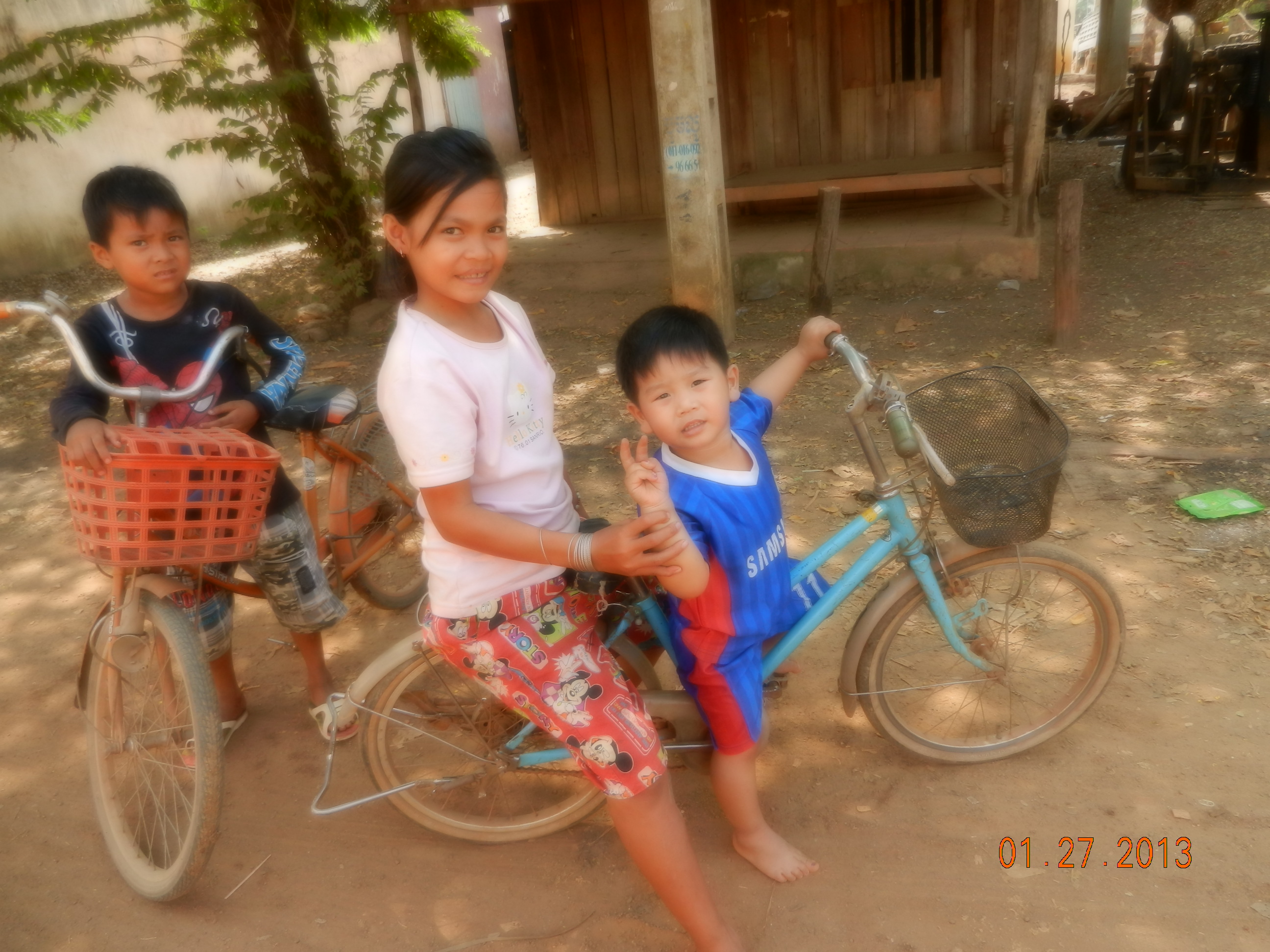
Soon Sol wakes us up letting us know we will be getting to a village near the river. Sol says that they make silver ornaments here. Some cousins are curious to see them and buy a few. On the way I get distracted by little children riding motorbikes and bicycles. I am always interested in children wherever they are so I stop and they start saying a few phrases in English, “How are you madame? What is your name?” Cheeky little darlings! So I ask them their names ( very difficult for me most of the time) and ask them why they are not in school. They smile and of course change the subject to India , my clothes etc. ( In Malaysia they start singing movie songs and want to know about the actors in Bollywood) Sol hurries us to the silver factories. The women are honest and tell us it is silver plating on brass pieces. We watch them work and then get back to the boat, where lunch awaits us: chicken satay, toasted spiced vegetables, rice, and baked fish along with a fruit to eat, bananas. OK, one more opportunity to snooze before we get back.
Cambodia travels: cyclo trip and more
April 11, 2013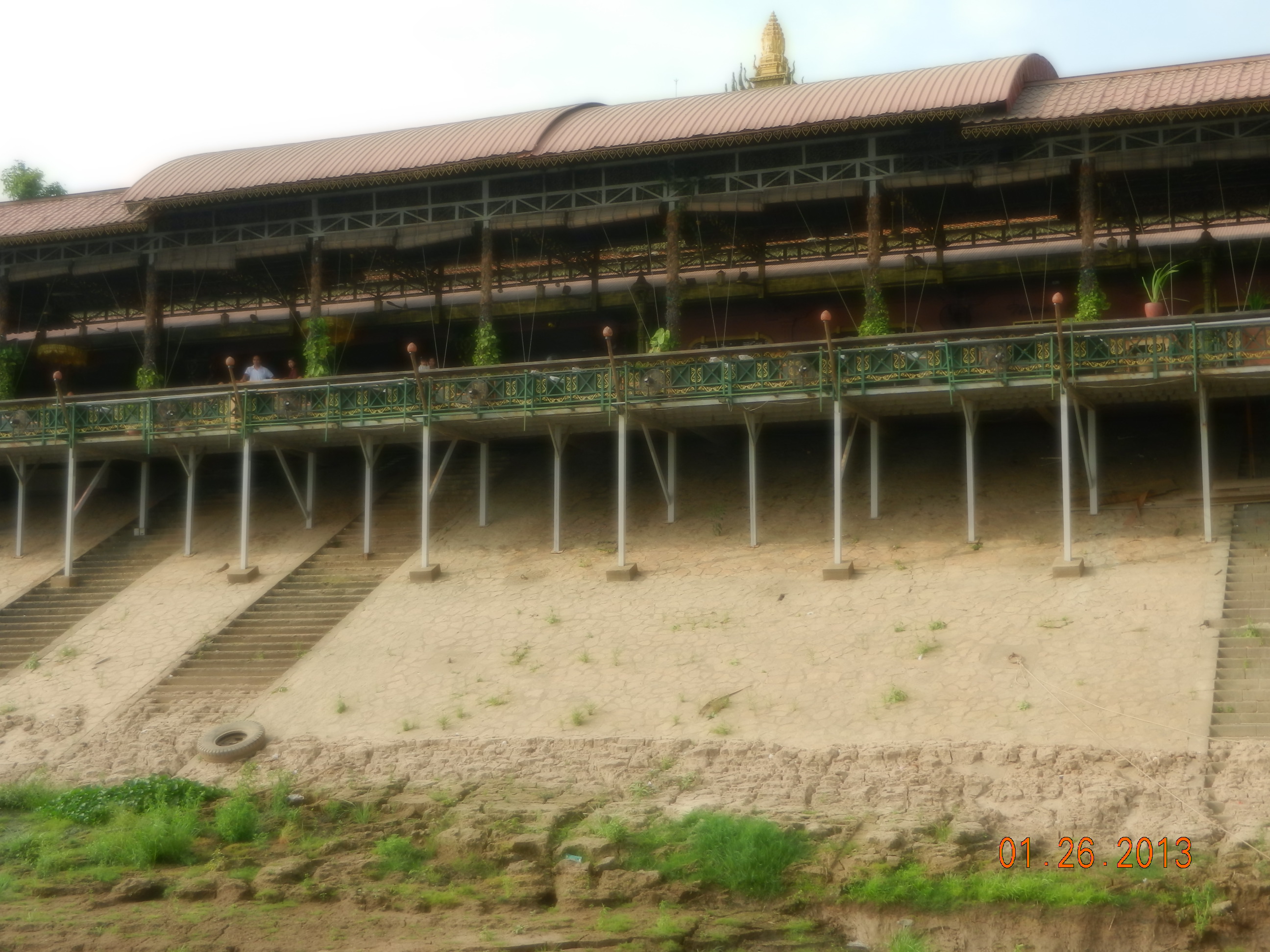

 The colors of the museum building are bright and the entrance looks ornate and beautiful. Once we go in, it is easy to see the prevalent Hindu/Indian influence in Cambodia: statues of Vishnu and Brahma scattered around along with the Apsara and other fixtures of Cambodian art. I remember our trip to Thanjavur, South India and marveling at the bronze statues of the gods and goddesses, such precision, grace and style! These are different yet majestic and massive sizes. South-east Asia was definitely influenced by the Hindu kingdoms and had several Hindu kings rule there as well. I remember seeing a stone structure depicting the story of the Ramayana in my Cambodian friend’s home in the US.
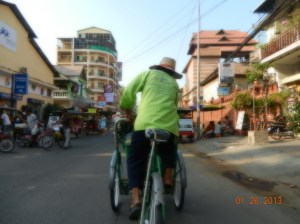
Yet with all these Hindu influences, the message of Buddha reached the far east and converted a lot of them to the religion of Buddhism and left few in India. Sol hustles us outside the museum and we see these green-shirted men waiting in cyclos (what we call cycle-rickshaw in India) to take us around the central park area. Gingerly I sit in one and when I feel comfortable, I start taking pictures of my cousins and uncles in other cyclos. The streets are very clean and I see big hotels and buildings as we go around and women are getting ready to start their evening fast food sales. Malaysia was similar, people love eating tit-bits and snacks on the street. Street vendors abound here.
The cyclo ride takes us around the park . It is a slightly elevated park and is named for a woman called Lady Penh . “Phnom” means hill so the capital is named after a woman:Lady of the Hill.Apparently , a Cambodian legend talks about an old woman named Penh who found four images of Buddhas and housed them on a hill near the Mekong river. Ok, I learnt something new today. We get back to our hotel and sit around chatting before dinner. Dinner is special tonight, Sol is taking us to a lovely restaurant near the Tonle Sap river for Khmer food. We sit near a bunch of dancers and have fish amok , vegetarian stews and soups that are incredibly tasty. The fish amok has lemongrass and a special flavor of galangal with lots of vegetables and some coconut milk. The flavor reminds one of Thai food, but it is not so spicy and yet so tasty. All the dishes are just so good, I think I can live here forever! Soon the music starts and the dancers in white move around gracefully and show expression in their hand movements. They wear along pointed gold-like crown on their heads and the movements are slight and precise. It is a wonderful end to a long day for us.
We then walk over to the Night Market which is colorful. I see lots of Laotian, Thai and Vietnamese fabrics along with the famous kramas of Cambodia. I have seen a lot of Cambodians, men and women move around the city in their motorbikes and their faces are covered with these checked cotton scarves they call kramas. The vendors cry out a few words in English, “Madame, madam, look, I give you good price!” I have no idea if ‘my head is being shaved’ (I am getting ripped off) here. I see a silk-cotton mix scarf and buy it. My cousin is horrified that I did not bargain much. We take tuk-tuks back to the hotel.
Cambodia travels:Phnom Penh
April 9, 2013 The flight from Malaysia to Cambodia was a crowded one and I am sitting next to this young beautiful girl from Ethiopia. “Are you visiting Cambodia?” I ask her and Tina tells me that she has been living there for over two years and her mother is a doctor. She lives near the capital and her brother owns a well-known restaurant here. She says,” Cambodia is over run with NGOs ( non-governmental organizations) some doing great work and others, well, others just using money to do their own things.” I am eager to know more. I tell her about my Cambodian friends in USA who came in the 80’s from Thailand. This was a mother with nine children, the youngest being a new-born baby in her arms. Today the youngest is married with her own little baby and the mother has gone back to Battanbang to take care of her mother. ” Ah , but they are all Americans, here you will see Cambodians are gentle, loving people, but they hardly run businesses here. Even though the country has been free of the Khmer Rouge days of the 80’s they are still not owners of businesses.” I want to tell her more about the Cambodian family that I know, but I also need to get some first-hand idea about Cambodia from Tina. She has a soft, French accent when she speaks to me about the people, the food, etc. Finally, as we get ready to depart the plane she adds, ” Form your own opinions here. I hope you find it a great trip for you.”
I land in the capital, worrying all the time if my e-visa will work. My group (mostly family members) join me and we sail through customs and immigration.Phew! Our tour guide is delayed and I see a Cambodian family waiting for their relatives coming from abroad. The grandma in the crowd is hugged by all the westernized family members who arrive. The grandma looks regal in her silk sarong even though she is petite. This is a young country, having lost almost 50% of its population during the Khmer Rouge genocide. Her face is lined, yet she looks charming.
We go to our hotel after going through broad streets and narrow alleys, all looking clean. Our guide states, “The King is going to be buried soon, so the streets are filled with Buddhist monks.” We see saffron-colored robes everywhere on the way. We get to our hotel. I go up to my room and lie down exhausted. The phone rings” Hello” I say crossly not wanting to get up with a ringing headache. ” What’s up Chobs? We are waiting for you in the lobby” Already? I come down and my cousin is not happy to see my tired face. I think I am hungry and the guide stops on the way to the palace area to let me eat something. Munching on my pear and sandwich I feel revived and ready for everything. My camera is there and I am eager to soak in the capital.
Sol, our guide, is a friendly person who is willing to answer questions. He seems to know a lot about his country and has a smiling face and that is reassuring. He teaches us a few phrases in Khmer, the language of the Cambodians and we promptly forget it except for one of my uncles who has a razor-sharp memory. ” We go now to the Royal Palace and Silver Pagoda, please no pictures inside it, OK?” Sol says. The Royal palace is the residence of the King and most of it is closed up. There are a lot of saffron-colored Buddhist monks along the way and it takes a little time to get to the area.
There is a beautiful garden around the palace area and we spend time admiring it. Next to the palace are these grey structures that look so elegant, they look like little shrines. Then we take our shoes off to get in and see the Silver Pagoda. The floor is of silver and we see beautiful gold and silver Buddhas, and a beautiful Buddha in crystal. ( Sol tells us that many of the treasures here were stolen by the Vietnamese but the richness of the Khmer period is obvious still.) We admire the Buddhas and someone talks about the Buddhas in Thailand. Sol says they were probably stolen from Cambodia! 
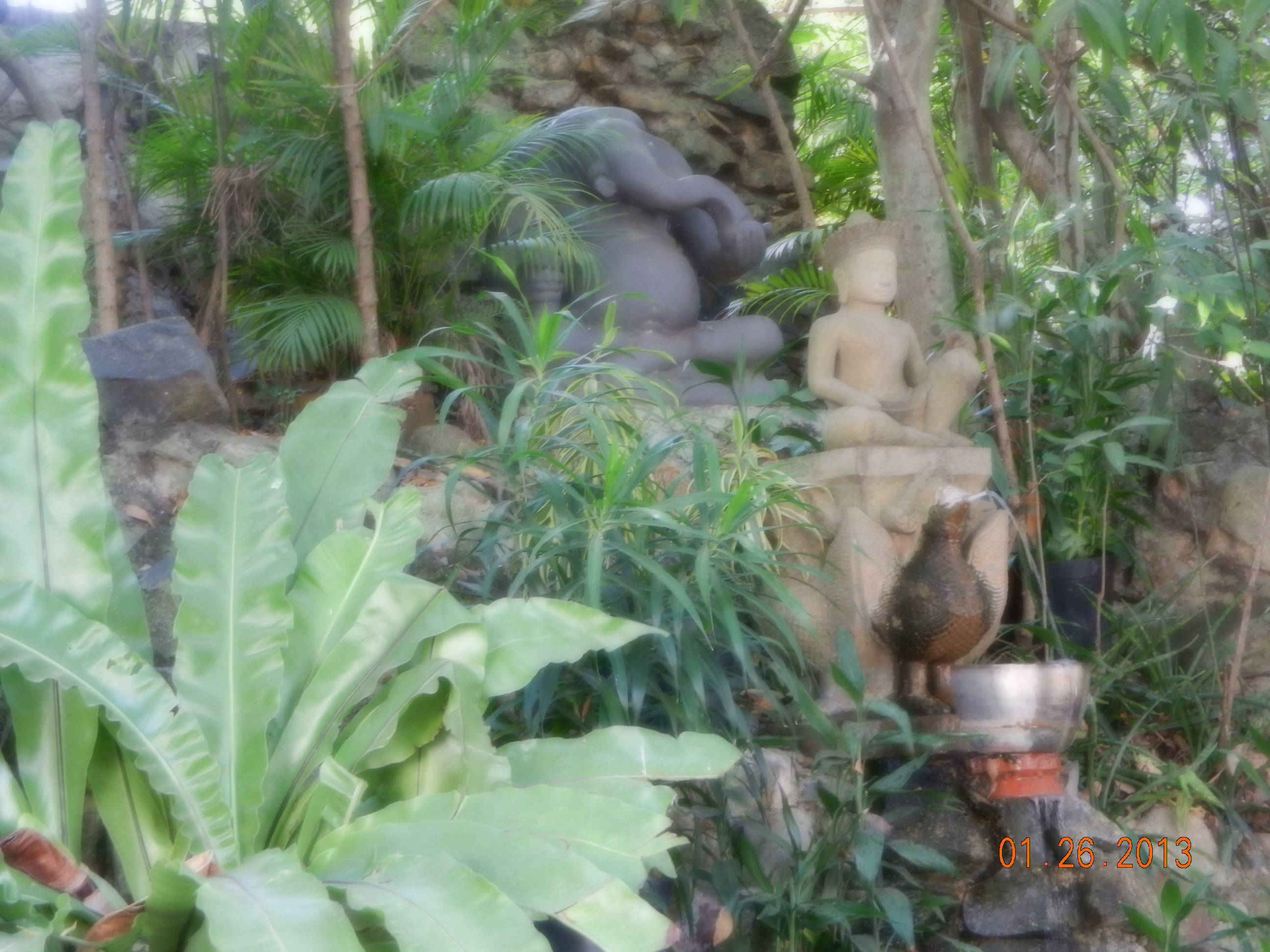
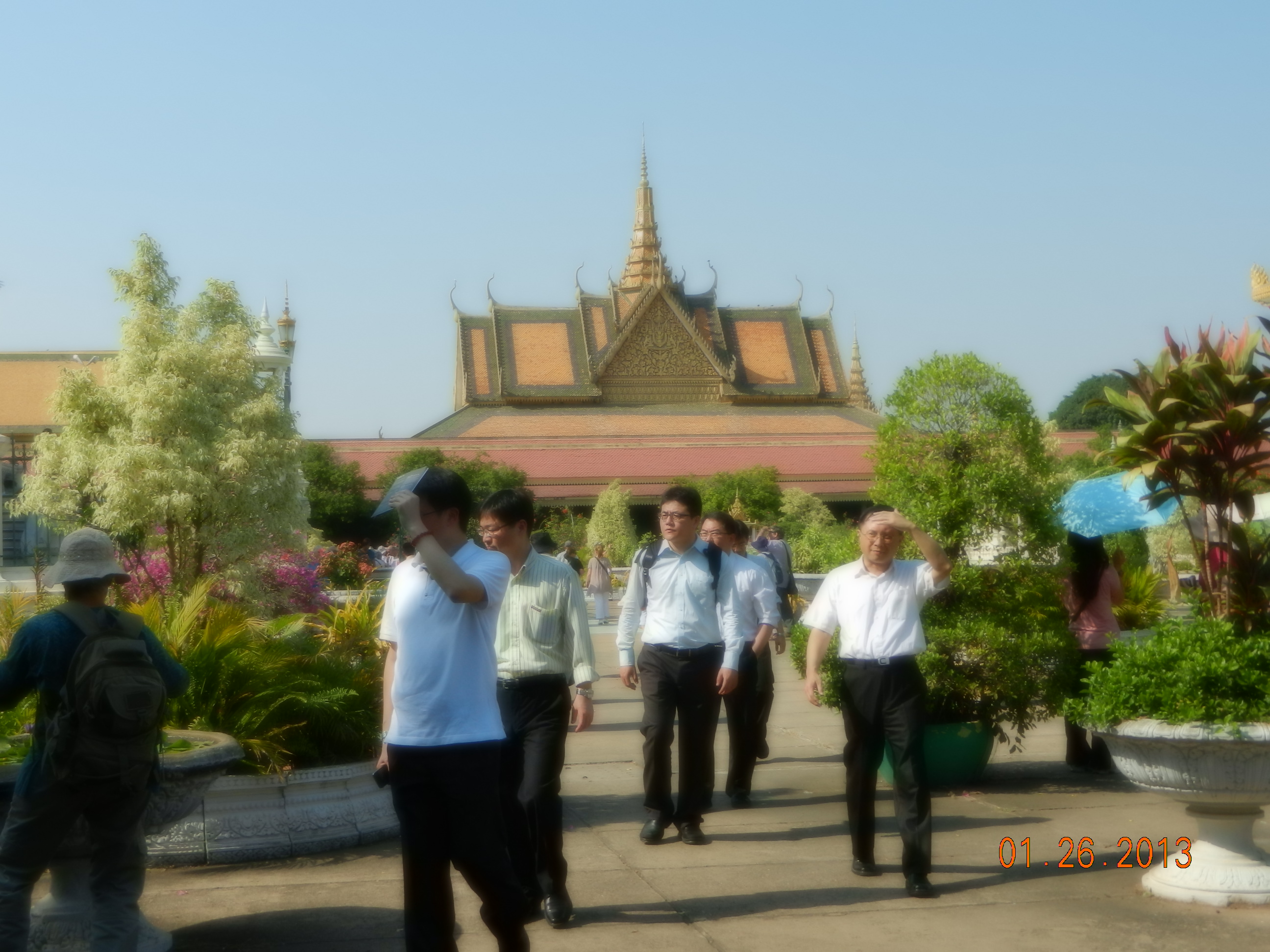 We notice a lot of tourists mostly from Korea. “Cambodia is now the place to visit” says Sol, “We have a lot of tourists and January is busy season”. It is a sunny day and we still need to go on cyclos and see the Museum which is close by.
Guatemala diaries: postscript
April 5, 2013After that experience in Antigua, which made us feel violated, I thought about all the different countries I have visited over the years. I lost almost everything in Prague many many years ago. I find that it always happens when you are distracted or focusing too much on taking photos. We as tourists do stand out with our unique behavior and need to be cognizant of that. Even the best and cautious travelers can have their belongings stolen. But I still think one should take a few precautions:
1. make copies of all your documents including credit cards, passports etc and put it in a different place.
2. Carry a smart phone so you can communicate with family back home.
3. Use pick-pocket proof attire to secure your documents and money/money bags around your waist and around your neck but tucked inside your clothes.
4. Try not to take your pictures without being aware of your surroundings, and above all, be very careful when there are crowds.
Ok, there might be more ideas but I want to go beyond the tourist talk and make some general observations about travelling.
I find that tourists in general are voyeuristic beings, almost like the way we behave when we go to the zoo: ” Hmmm.. interesting, wow, how strange/exotic they are.”….Very few of us show empathy, respect when we visit. We are eager to buy, consume, devour the knowledge and go home and put the trophies in our living rooms or elsewhere. I get irritated when I see tourists in Chicago staring at things and clicking away mindlessly as they take their boat tours and climb Sears Tower etc. But I also know that the very nature of tourism only allows you to see what is beautiful, picturesque and exotic. I am guilty of a lot of the things I abhor about tourists.
Yet, I say we are intelligent human beings who can show sensitivity and should learn more about the country before visiting. I do not just mean about the places we will visit but also learn about daily life for the ordinary person in that country. After returning from Guatemala, I heard a radio documentary about the environmental degradation in Northern Guatemala, an area that is hardly seen by tourists. Guatemala is a very poor country and has gone through many years of terrible civil wars. I am talking about being aware of the intricacies of the politics and economics of a country especially after having had the wonderful opportunity to see it. Because even as a tourist, you can see with different eyes. I shall be writing about my trip to Cambodia earlier this year and the history of that country is even more horrific.
 Chobhi's Blog