Science Makes Sense Week 7: Organic Chemistry, covalent bonds, alkenes/olefins,isomers, saturated and unsaturated fats .

October 5, 2015

I remember noticing that bananas in this country seem to ripen faster than in India. Two days ago the banana was greenish-yellow and today it is completely yellow with brown spots, why?

Most of the bananas in the United States are picked unripe and ethylene gas is passed over them to hasten the ripening process.No wonder half green and yellow bananas turn ripe so quickly. In fact, during the natural ripening of fruits, ethylene gas is given off. What is ethylene, also known as ethene? It is the first in the alkenes (also called olefins/olefines) series I will talk about today.

IMG_2304IMG_2315

(Week 3 was about alkanes.) Alkenes have the general formula CnH2n and the first one in the series is C2H4 , called ethylene or ethene, (second picture above)

Notice the two bonds connecting the two carbon atoms. Let us take a few minutes to understand what the word ‘bond’ means. There are different kinds of chemical bonds; we have seen hydrogen bonding and today we will look at covalent bonding. Organic compounds exhibit covalent bonding.

That line or toothpick (Week 3) I use to indicate a bond is actually the sharing of electrons here. All chemical reactions involve transfer of electrons and all compounds in organic chemistry consists of  the sharing of electrons. Here with only C-H bonding you have the sharing of two electrons.The carbon atom has one electron that it shares with the one electron that the hydrogen atom has leading to two shared electrons;but since there is a double bond for the C-C bond, there are actually 4 electrons here. ( If it had been a single bond as in ethane, there would be the sharing of two electrons for the C-C bond.)These two shared electrons comprises the covalent bond indicated by lines (or dots for the electrons) like shown above in ethylene or ethene.

Since we are dealing with double bonds between two carbon atoms, the first in the alkene series has to have two carbon atoms.When n=3 we have  C3H6, called propene and when n=4 it is called butene,  C4H8. When there are 4 carbon atoms, for butene, you can have the double bond between the carbon 1 and 2 and create two distinct structures. First, you can have a straight chain structure and then a branched chain structure for the carbon atoms. (You need a minimum of 4 carbon atoms to do straight and branched chains of carbon atoms.

Next, the double bond can move between the second and third carbon atoms. Now, since we have a double bond, the structure cannot rotate so positions for the attachments to the second and third carbon atoms become rigid. When the methyl ( methane is CH4 ,but when one hydrogen is less it becomes methyl written as CH3) components are on the same side it is called ‘cis’ and when they are on opposite sides it is called ‘trans’. Observe propene ( only one form) and butene with 4 isomers:

IMG_2319IMG_2326

Notice that the carbon atom has 4 bonds while the hydrogen atom forms only one bond. If you have a 5 carbon alkene,it  will be pentene, and you will have more isomers possible. Many of these isomers are extremely important; slight variation in structure causes immense changes in properties. Week 11 we will look at some remarkable examples of isomers and their significance in medicine, especially.

Week 3 I covered alkanes, where the carbon atom had no double bonds, today we see a double bond in each of the alkenes mentioned. Hydrocarbons like alkanes are called saturated hydrocarbons and when a double bond or bonds are present in an organic molecule, it is called unsaturated. Oils are usually unsaturated  which means they are organic molecules with double bonds while solids like butter, lard are saturated with no double bonds. In daily life we hear the words ‘saturated fats’, ‘unsaturated fats’ and now you can at least know that the chemical structure includes single or double bonds between carbon atoms.

Alkanes are vital as fuels while alkenes are the building blocks for the manufacture of plastics. Ethene, we already know is used in the artificial ripening of fruits.

Activities for Middle School Teachers: Let students construct alkenes from n=5 to say, n=10. Let students do straight chain and branched chain for the carbon atoms and also look for the different isomers.

Let students look for a relationship between number of carbon atoms and number of isomers, is that a linear relationship? ( What is a linear relationship?)

Find out if other countries ripen fruit artificially, what chemicals do they use besides ethylene/ethene? Locate these countries in a map.

Students can study how effective unsaturated fats are compared to saturated fats for a healthy diet.

Nuggets of information: diene is an organic compound with two double bonds. Butadiene is a four-carbon hydrogen compound with two double bonds. The formula is C4H6  and the carbon double bonds are in the 1, 3 position: -C=C-C=C-

Butadiene is extremely useful today; it is the starting point for the manufacturing of synthetic rubber (Week 6)

Trans fats  today are even worse for our diets than saturated fats. The adding of hydrogen to unsaturated oils leads to a solid product like margarine where the hydrogen atoms are on opposite sides of a double bond in the oil structure. ( trans position).

References:
https://alkenes.wordpress.com/page/2/http://news.therawfoodworld.com/saturated-vs-unsaturated/http://www.bing.com/images/search?q=trans+fat+chemical+structure&qpvt=trans+fat+chemical+structure&qpvt=trans+fat+chemical+structure&FORM=IGREhttp://www.mayoclinic.org/diseases-conditions/high-blood-cholesterol/in-depth/trans-fat/ART-20046114

Science Makes Senses Week 6: Sulfur, brimstone, rubber,sulfa drugs and alliums

September 27, 2015

Pope Francis is visiting the United States, and I could not help but think of the Catholic nuns in school who would scare us with words like ‘fire’ and ‘brimstone’.They would warn us about sinning and hell. ‘Brimstone’ was just another word for sulfur which is supposed to be burning forever in that nether place.

The word ‘sufra’ in Arabic means yellow and sulfur’s name could have been derived from it. Also in Sanskrit, sulfur was called ‘Shulbari’ which means ‘enemy of copper’ From ancient times it was known that metals like copper reacted with sulfur.

For years, people have believed that sulfur springs were good for their health and took daily dips in them. In fact, there are places in Texas and Florida named Sulphur Springs! Sulfur was also used as a fumigant (to control pests) thousands of years ago.Today I will talk about this useful element that we have known for so long and hope to separate myth from reality.

The chemical symbol is S. When sulfur burns in the presence of oxygen, it burns with a blue flame. and has a distinctive odor:

S +O2    →   SO2

                          ( Sulfur plus oxygen gives sulfur dioxide)

Match heads made of sulfur when burnt would lead to the same odor: same oxidation reaction, leading to sulfur dioxide.

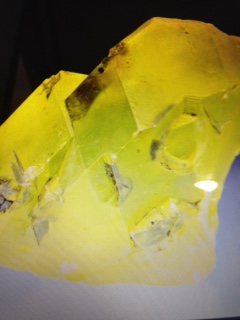
Sulfur is lemon-yellow in color and is a non-metal. In the Periodic Table it is just under Oxygen, or in the same Group as Oxygen. (The rows in a Periodic Table are called the ‘periods’ and the columns are called ‘groups’.)

week 6 sweek 6 ssweek6

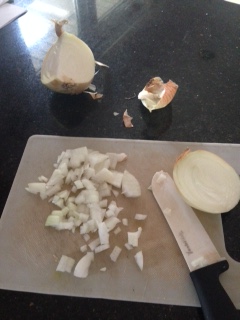
Many vegetables we cook with have sulfur compounds in them including onions, garlic, cabbage. Eggs contain sulfur and rotten eggs have a distinctive smell because of hydrogen sulfide  H2S (a compound of 2 atoms of hydrogen and one atom of sulfur). Sulfur is found offshore in Texas and Louisiana and is not usually mined directly, since hydrogen sulfide, a toxic gas, is often present, along with sulfuric acid fumes. The sulfur is mined by the Frasch process, where hot water is pumped to the levels where sulfur is deposited and fairly pure sulfur is obtained. Actually, more and more extraction of sulfur takes place during petroleum production. However, in countries like Indonesia and parts of South America, even to this day sulfur is mined directly from volcano craters,  a job filled with hazards for the miners.

Sulfur is used in the vulcanization of rubber. Natural rubber tends to stretch or get hardened easily.Vulcanization is the addition of sulfur to natural rubber which then increases its tensile strength; an important property in the manufacture of tires. Today tires in the United States are mostly made using synthetic rubber versus rubber from a tree(natural rubber).

Most of the sulfur that is extracted is used in the manufacture of sulfuric acid and most of the sulfuric acid is used to make fertilizers and batteries. Sulfur is also used as a fungicide.

Before the manufacture of antibiotics we had sulfa drugs, chemically synthesized organo-sulfur compounds used to treat bacterial infections. (An organo-sulfur compound is a multi carbon,multi hydrogen and sulfur containing compound  with covalent bonding) (I will talk soon in my blogs about covalent bonding) In 1930, the first case is recorded where a sulfa- drug, a sulfanilamide molecule, cured bacterial infection successfully. Chemists were eager to synthesize more sulfa drugs and between 1935-46, over five thousand different variations of the sulfanilamide molecule was made.(Don’t be scared by the big name, this is an organic compound containing sulfur-‘sulfa’; the nitrogen with hydrogen indicates the ‘ amide’. As we continue to study Organic Chemistry, all these so-called complicated names will make sense.) Out of all the molecules synthesized, three more stand out: Sulfapyridine, used for the treatment of pneumonia, Sulfathiazole for the treatment of gastro-intestinal infections and Sulfacetamide for the treatment of urinary tract infections.

In fact, during World War I, (1914-18) there was no effective treatment available for bacterial infections. Because of infections like gangrene many soldiers had to have their limbs amputated or unfortunately, sometimes they died. During World War II, (1939-45) with the discovery of sulfa drugs Sulfapyridine and Sulfathiasole, veterans’ limbs and lives were saved. Sulfa drugs cured thousands of lives at home suffering from pneumonia and in the battlefield and were considered ‘wonder drugs’.Some of us born in the ’50s and ’60s are well aware of using these sulfa drugs.

The intriguing  fact is that these sulfa drugs do not kill the bacteria, which is what an anti-bacterial agent is supposed to do. Bacteria need folic acid to thrive and multiply inside our bodies. (Most of our folic acid comes from leafy vegetables that we eat.) The remarkable fact is that the middle portion of the folic acid  structure looks a lot like the structure of the sulfa drug. So the bacteria takes in the sulfa drug, thinking it is folic acid and dies.

Without sulfur chemists could not have synthesized these wonder drugs. Of course, today we have penicillin (naturally occurring substance that contains sulfur) and other antibiotics that are more effective , but we still use a few sulfa drugs for certain kinds of infections. This lemon-colored solid called sulfur plays a significant role in our lives. It is the 17th most abundant element on earth and the 10th most abundant element in the universe.

Activities for Middle School Teachers: If you have access to a laboratory, create some of the allotropes of sulfur, so students can observe the various crystalline shapes.

Collaborate with the geography/social studies instructor to find where sulfur is mined from volcanoes, where sulfur is extracted using the Frasch process and where sulfur is obtained during petroleum production.

Connect with history to look at young adult fiction based on World War I and II.Read books where veterans returned from World War I with limbs amputated.*

Let students interview family members (great uncles, great grandparents, great aunts etc) and learn about the use of sulfa drugs in their younger days during bacterial infections.

Nuggets of information: Sulfur dioxide was used as a refrigerant to create the first artificial ice-skating rink.

Elemental sulfur has several allotropes. When an element has one or more allotropes of itself it means it can be found having different structures. Sulfur exists as monoclinic, rhombic and plastic sulfur.

Hair,skin and  feathers contain a lot of sulfur,

Why do we cry when we cut onions? The cells of the onions release a sulfur containing compound that breaks down basically into sulfuric acid and other sulfur compounds, enters our eyes and reacts with the water there to sting our eyes and makes it water to flush the acid out.

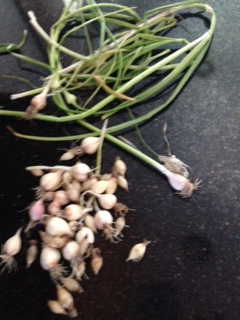
Onions, leeks, chives, garlic all belong to the Allium family and they are all monocotyledons not dicotyledons. (i.e., when they sprout they have single leaves instead of two leaves.) Alliums absorb sulfur from the soil.

References:

Sulfur Element Facts

http://www.encyclopedia.com/topic/sulfur.aspx

http://www.rma.org/about-rma/rubber-faqs/

http://www.nuffieldfoundation.org/practical-chemistry/allotropes-sulfur

Le Couteur, Penny and Burreson,Jay,   Napolean’s Buttons: How 17 molecules changed History,(Jeremy P. Tarcher Putnam,2003)

*https://theprettybooks.wordpress.com/2014/07/28/top-ten-childrens-and-young-adult-books-set-during-wwi/

Science Makes Sense Week 5: Wonderful water, The Ghost Map and Weeping Willow

September 20, 2015

Every time I open the faucet to wash dishes or drink some water, I have to remind myself of the fact that thousands of people, mostly women, all over the world, are right now searching for/storing water and fuel for their daily survival.  I also think of California now using gray water (water used for washing/bathing) whenever possible to water gardens after going through a severe drought and forest fires. Water is such a precious commodity but we take it for granted when there seems to be plenty available. All trees, plants, animals need this liquid to survive but a tree like the weeping willow, would hardly grow without a constant flow of water.Today we will look at water, first as a chemist and then its significance in 19th century England.

IMG_2257IMG_2260IMG_2266

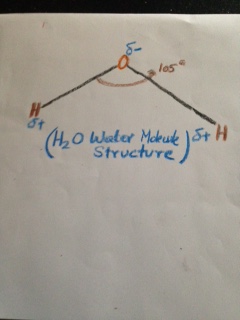
A water molecule (a molecule is a combination of atoms) is made up of two atoms of hydrogen and one atom of oxygen and the chemical formula is written as H2O. The structure is planar (unlike methane, CH4 , which is 3-dimensional, a tetrahedron) and can be depicted with the H-O-H angle as 1050  

and is shown as:IMG_2265

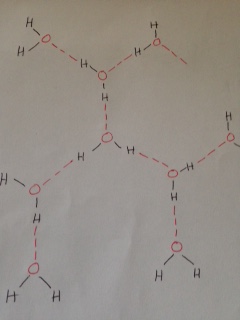
Also, the molecule is polar since the electronic cloud in each bond, moves a little closer to the oxygen atom and therefore the hydrogen atom is slightly positive(δ+) and the oxygen atom is slightly negative (δ-). This allows the different molecules of water to form a connection with each other like this:IMG_2264This is called hydrogen bonding.

Water has some unique properties because of its polarity; it dissolves  many solids and is used as the first test to detect chemicals in the laboratory: is the substance soluble or insoluble in water? Water is called the universal solvent and allows us to absorb many nutrients when we eat, because they dissolve in water readily. Substances that dissolve in water are called hydrophilic and those that repel water( like oil) are called hydrophobic. 

Water exhibits cohesion, adhesion and surface tension as well because of its polarity. Cohesion means water sticks well to other water molecules and adhesion means that water sticks to other substances as well. Because of adhesion, water spreads out well on a glass plate. The high surface tension of water leads to more of cohesion versus  adhesion causing water to act like the surface is a stretched transparent plastic sheet. Surface tension is why water beads up on a waxed car or on the surface of leaves/fruits (that have a waxy, oily surface) after a rainfall, or when you wash them.The meniscus of water is curved such that it has a concave shape, more on the sides of the container and less in the middle, away from the container. Adhesion and water’s high surface tension are responsible for the shape of the meniscus.

The hydrogen bonding leads to some unique properties as well. Water has a very high specific heat, which means it takes a long time to heat up. (I will talk again about specific heat later) But to me, the most interesting and useful application of water is in the way it freezes. All liquids, when they cool down sufficiently become solids and almost always the solids are denser than their liquid form, which means they will sink to the bottom of a container containing the liquid.  Water, however, behaves differently. As you start cooling water, the density (ratio of mass over volume) increases, but at  40C it starts getting less dense. (Remember that water freezes to ice at 00C)This has a lot to do with the lattice-like structure due to hydrogen bonding that leads to a lot of open spaces between the water molecules.(When volume increases, density decreases.) So, when the weather gets cold and the local pond or river starts freezing, the ice forms a layer on the top, does not sink down and all aquatic life continues to live in cold weather,since the water body does not freeze solid; amazing!

In the middle of the 19th century, London was already a very congested city. The book, The Ghost Map, written by Steven Johnson, is a true account of the mysterious high number of deaths that was happening suddenly in a part of London. At that time, the prevalent notion was that because there were many people living together, there was ‘bad air’ that caused this epidemic. However, a physician Dr Snow, figured out where the deaths were taking place and did a detailed mapping of that area to find out that the abnormal high mortality rate was because of contaminated drinking water from the same source; a water pump. For the first time, a water-borne disease like cholera were correctly diagnosed. As you can see here, water the universal solvent, can also lead to terrible consequences.

Activities for Middle School Teachers: Work collaboratively with the math instructor on gathering statistical data (like the data collected by Dr. Snow in the book) .

You could also collaborate with the Social Studies instructor to read the book The Ghost Map to understand the importance of water in figuring out how the epidemic spread.

During  the early winter season, take students on a field trip to view lakes, ponds that have a thin upper layer of ice. Ask students, “Why do ice cubes float and not sink in water?”  Take students to the nearest water filtration area for them to understand how local water is purified.Students can learn how to measure the volume of water in a measuring cylinder by looking at the lower meniscus at eye level. In addition, students could improve their geography skills and locate big cities around the world close to a water source.

Nuggets of information: Stop drinking bottled water, you are wasting money and adding more plastic to the environment.The water is not any different from tap water, and is slightly treated. Contrary to popular belief, this bottled water does not come from some mysterious sparkling spring somewhere.

John Snow mentioned in The Ghost Map,is considered the Father of Epidemiology. This means the science  of the patterns , causes  and effects of diseases  and health in a defined population.

References:

http://www.bing.com/images/search?q=structure+of+water+molecule&qpvt=structure+of+water+molecule&qpvt=structure+of+water+molecule&FORM=IGRE

http://science.howstuffworks.com/environmental/earth/geophysics/h2o7.htm

The Ghost Map The Story of London’s Most Terrifying Epidemic — and How It Changed Science, Cities, and the Modern World

by Steven Johnson Riverhead Books, New York, 2006.

http://www.alternet.org/environment/bottled-water-americas-destructive-love-affair

Science makes Sense Week 4: Chemistry and Social Justice, fracking, natural gases, pollutants, water

September 14, 2015

“Drill baby drill!’ was the rallying cry in 2008 before the Presidential Elections by a certain party in the United States. It did not matter that the opposing party won the elections since drilling for oil in Alaska and fracking in several states is being continued with no stoppage.

Last week, I talked about the petroleum industry and the heavy dependence on all the by-products for our energy needs here in the United States. The spread of Chemistry and its applications has been exciting and fruitful in industry, pharmaceuticals, cosmetics (to name a few) especially for the past century. Along with the benefits, there has been side effects that have adversely affected the human race as well as the environment around us. Every fourth week we shall look at this under the sub heading” Chemistry and Social Justice” Today I will focus on the popularity of fracking to extract natural gases from shale oil.

Most petroleum products are extracted using oil rigs that look for fossil fuels in land and water (called off-shore drilling) However, in the early 14th century, shale oil deposits ( layer of rock sometimes thousands of feet below) were discovered and used in Switzerland and Austria, for fuel and lighting. This deeper layer was not used much after the discovery of oil in the mid 19th century from under the ground in the United States.But, now once again, shale oil extraction, called fracking, is prevalent in the 20th and 21st century.

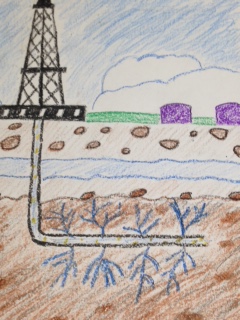
What is fracking? Fracking, also known as ‘hydraulic fracturing’ is the process used to force water under pressure through a vertical and horizontal tubing  under ground to the shale oil depth. The diagram illustrates the setup while Reference #2 explains fracking clearly. The forced water along with a tubing that enters the pipe causes fissures (breakages) in the soil forcing natural gas and petroleum to seep into the pipes and get pumped out. Natural gas is made up of methane (CH4) and ethane (C2H6). while the other petroleum by products could range from propane (C3H8) and higher alkanes of the general formula  CnH2n+2 . (Last week’s blog explains the chemistry a little more.)

fracking

As one can see, the fracking process is fraught with problems. First, a lot of water is used that will definitely deplete the water table levels. People and livestock in the area will be affected by less water availability. Second, the water table could be contaminated by all the chemicals used in the fracking process. (These chemicals could seep into the water table.) What are these chemicals?

There are more than 50 chemicals used and the fracking industry is secretive/ignorant about some of the chemicals . Many of the chemicals listed are known carcinogens and methane, one of the products collected, is extremely flammable. Also, methane has been documented to play a critical role in climate change. Xylene and toluene, hydrocarbons that have a ring like structure are also present, very toxic and easily inhaled since they are volatile liquids. (Any liquid that can convert to gas molecules at room temperature is called volatile, just like gasoline.)

“Gasland”, the documentary made a few years ago, clearly illustrates how people living in the area where fracking took place were afraid to open their faucets. This was because the water was mixed with methane and cloudy. When the faucet was opened, sometimes, flames would appear at the mouth of the faucet if a lighted match was placed there.

Fourth, earthquakes are prone to happen in the areas where fracking takes place, since the soil layers, thousands of feet below the ground, have been disturbed considerably. There are  more reasons outlined in one of the references,but these four are sufficient to reconsider fracking and look for alternative sources of energy like electric, wind , hydro and solar for our energy needs.

Additions/ Corrections: Natural gas is used not just for cooking but for heating purposes as well.

Activities for Middle School teachers:compare the gold rush of 1849 with the oil rush that began in 1859 and continues till today. This could be a combined project with the social studies teacher.Students could also research news articles about fracking in their states/ neighboring states and the public opposition to it.

Nuggets of information: Southern Illinois is where most of the fracking takes place in Illinois; however there are fracking sites in McHenry County as well.

The United States contains three-quarters of the world’s shale oil reserves.

Even though the United States is moving towards renewable energy sources, It is still among the top consumers/ producers of petroleum along with natural gas and coal, all non-renewable energy sources.

References:

http://www.bbc.com/news/uk-14432401

http://www.bing.com/videos/search?q=fracking+process&FORM=VIRE3#view=detail&mid=9AE1D3CEDDBDBC903D049AE1D3CEDDBDBC903D04

http://wilderness.org/blog/fracking-dangers-7-ugly-reasons-why-wilderness-lovers-should-be-worried?gclid=CKbw2cTO8ccCFZKIaQod5DYIiA

http://fracfocus.org/chemical-use/what-chemicals-are-used

http://8020vision.com/2011/04/17/congress-releases-report-on-toxic-chemicals-used-in-fracking/

“Oil Shale” (PDF). Colorado School of Mines. 2008. p. 2. Retrieved 2008-12-24

https://answers.yahoo.com/question/index?qid=20140621205518AAC8Bwb

http://www.youtube.com/watch?v=dZe1AeH0Qz8

http://www.globalpost.com/dispatch/news/business/energy/140527/maps-non-renewable-resources-around-the-world

http://www.giss.nasa.gov/research/features/200409_methane/

Science Makes Sense Week 3: Organic Chemistry-Nomenclature,hydrocarbons, alkanes, whales and petroleum

September 7, 2015

Man has always been in need of energy sources; starting with the discovery of fire. From the middle of the 17th century till the late 19th century , whale hunting was prevalent to such an extent, that certain kinds of whales, like the blue whale, the sperm whale ,were hunted for their oil till they almost became extinct. Whale oil was a necessary source of fuel and heat including whale oil for lighting, as well as for candle waxes and even in the processing of textiles and soap. An unexpected gush of oil discovery in Pennsylvania, USA,  is considered the beginnings of the use of fossil fuels for Western energy sources in the 19th century. In China and Iran, seep oil as it was called,  was used for fuel from early times. (4th century through 16th century)

What are fossil fuels and why do we call them that? Basically it is animal remains under great pressure and temperature over years and years that converts to crude petroleum. The distillation of petroleum leads to myriad products that literally fuels our every day life.(Distillation is a chemical process that starts with heating crude petroleum obtained from oil rigs and separated into several solids, liquids and gases used for fuel and other purposes.)

Every third week we will study organic chemistry. If you look at  the Periodic Table, you find that the 6th element is carbon. Carbon is such a busy element because it can combine with other elements to form hundreds of carbon compounds. The study of these compounds has been named Organic Chemistry to distinguish it from Inorganic Chemistry, which is the study of the rest of the elements in the Periodic Table!

Today we will look at one of the combinations of carbon and hydrogen or compounds comprising hydrogen and carbon; these are called hydrocarbons. ( A compound is a chemical combination of two or more elements.) The first series of hydrocarbons have the general formula shown below and are called alkanes or paraffins.

CnH2n+2

The first alkane in the series has n=1 which makes 1 carbon atom combine with 2×1+2=4 hydrogen atoms to give :

C1Hor CH4

as we commonly write it (when there is only one atom of any element you do not need the subscript 1 for it)

This hydrocarbon compound is named methane. Methane is also called ‘marsh gas’.  As the second name suggests,  it  is a gas and is also highly flammable. Methane is the main component of natural gas used at homes and other places for cooking purposes:IMG_2239IMG_2237

Now let us make n= 2 and  we get the second compound in the series called ethane;  (n=2, so there are 2 carbon atoms and 2×2+2=6 hydrogen atoms) and the formula is   C2H6 for ethane.

The next compound in the series (n=3) will be three carbon atoms combined with 2×3+2 =8 hydrogen atoms called propane

written like this/ chemical formula : C3H8

When n=4, we have 4 carbon atoms combined with 2×4+2=10 hydrogen atoms called butane and written like this/ chemical formula: C4H10         

So far we have seen methane, ethane, propane and butane; all four are gases at room temperature. Notice all end in ‘ane’ and are all called alkanes.

When n=5 we have 5 carbon atoms combined with 2×5+2=12 hydrogen atoms and the name is pentane. From now on the names will be the latin word for the number so 6 carbon atoms will be called hexane and 7, heptane. 8, octane, and so on. As you notice the formula for pentane will be  C5H12 , for hexane : C6H14, for heptane; C7H16 , and for octane: C8H18.

The first four alkanes were named before the nomenclature (a fancy word that means ‘naming process’)was decided.

Ethane is also used along with methane as natural gas for cooking purposes. Propane is used in propane tanks for outdoor grills. Butane is the fuel used in cigarette lighters and butane torches. Pentane is a low-boiling liquid used as a solvent and in the creation of plastic foams, hexane( liquid) is used in gasoline, and in industry as a solvent. Heptane has 0 octane rating and is not used as a fuel for gasoline since it causes high engine knock., it is used as a solvent in industry. Octane has good octane rating ( obviously) and is a major component of gasoline.

We have looked at the formula and uses of at least 8 alkanes, but it is important to picture how the arrangements of atoms or structure of these compounds looks like. Using simple materials like toothpicks and marshmallows or raisins one can construct these compounds. Here is a picture of the first three alkane compounds: methane, ethane and propane. As you can see, they are three-dimensional structures; for methane, one can see the tetrahedral structure of the compound.(The carbon atom is depicted by a tomato, and the hydrogen atom is depicted as a marshmallow here. The toothpicks are supposed to indicate the bond between the atoms; distances between the atoms, sizes of the atoms here are not accurate, but these models help understand structure.)

IMG_2243

Next time (Week 6) we might be able to look at structure a little more closely and learn more about structural differences.Most of the alkanes studied today are the by-products in the distillation of crude petroleum. As you can see they are invaluable in our everyday life. However, next week as we look at Chemistry and Social Justice, we will talk about the problems in our society as a result of our over-dependence on petroleum/ fossil fuels.Careening from the near extinction of whales we are now at the point of near exhaustion of our fossil fuel energy resources.

Activities for middle school teachers: Let students figure out the structures of nonane, (9 carbon), decane etc till , say n=20. Students can also draw a graph using graph paper, making the number of carbon atoms on the x-axis, and the number of hydrogen atoms on the y-axis and plot a graph.(For example the x point for methane will be 1 unit and the y point will be 4 units.) What will be the shape of the plotted points? Why? Can the student now predict the structure of any alkane from that plotted graph? How will they do it?

If the language arts teacher is reading “Moby Dick” by Herman Melville, students will have an idea about the hunting of whales for whale oil two centuries back.

Nuggets of Information:The word ‘petroleum’ comes from 2 Greek words,’petra’ for rock and ‘oleum’ for oil.

Only the Inuit people have the legal rights to hunt whales today.

In 1859,workers in USA discovered petroleum jelly as a by-product in the oil rigs . They were not too happy with the sticky product, but found it was effective in the treatment of minor scratches and bruises. Today it is sold as Vaseline.

References:

http://www.scienceclarified.com/everyday/Real-Life-Chemistry-Vol-3-Physics-Vol-1/Organic-Chemistry-Real-life-applications.html

http://sjvgeology.org/history/index.html

http://io9.com/5930414/1846-the-year-we-hit-peak-sperm-whale-oil

http://www.petroleum.co.uk/alkane-chemistry

http://historicaltidbits.blogspot.com/2012/05/petroleum-jelly.html

http://www.newworldencyclopedia.org/entry/Petroleum

Science Makes Sense Week 2: Apples and oxidation, enzymes and catalysts.

August 31, 2015

While the West Coast is going through some raging fires and no rain, Northern Illinois is going through an early cooling-off period. So we have fall-like weather and our apple tree is chock full of apples. I pluck one and eat it and start reading a book. By the time I get back to it, it looks all brown … what happened?

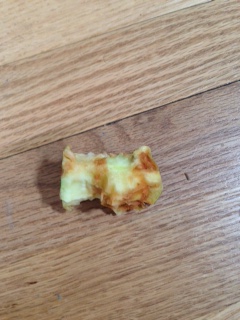
apple treeapple core

Apples contain a lot of iron and the iron in the apple reacted with oxygen in the air to form iron oxide, almost the same way iron nails sitting outside rust and the reddish brown color is iron oxide. (Okay, do not get excited, a little iron oxide will not harm you!)The reaction is:

2Fe  + O2            →         2FeO

Iron + Oxygen produces Iron oxide

There is an enzyme in the apple which hastens the browning process. ( An enzyme is a biological catalyst, and a catalyst is any substance that hastens a chemical reaction but does not take part in the reaction) This enzyme is called polyphenol oxidase.  ‘Poly’ means more than one and ‘phenol’ is an organic compound with a hydroxyl  ( written as -OH, basically an oxygen and hydrogen atom combination). (Every third week,  I will talk about  organic chemistry,extremely vital to understanding what is around us.) Enzymes end with ‘ase’ in biology and this particular enzyme hastens the oxidation reaction, or more accurately, it hastens the transfer of electrons, and is called an ‘oxidase’. Enzymes are an interesting  topic in biology where the conversion of starch into sugar is hastened by the presence of a particular enzyme called amylase and pepsin is an enzyme that breaks down the food we eat in the stomach. In fact , the enzyme amylase is also found in our saliva and starts the breaking down of the food we eat! (Before enzymes were officially named in 1955, the enzyme words ended in ‘in’and after 1955 the ending ‘ase’  was used.)

Some fruits and vegetables including pears, bananas, avocados and potatoes contain this enzyme and turn brown when cut  because the cells are exposed to the air that contains oxygen.

For now you may surmise that the word oxidation implies reactions with oxygen. The burning of iron is also an oxidation reaction where iron combines with oxygen present in the air to form iron oxide. Many metals get oxidized this way. Silver jewellery is available in shiny ‘white’ color or oxidized when it appears grayish/blackish. ( reaction with oxygen, once again to form the grayish, blackish silver oxide) Many reactions are called oxidation reactions even without intakes of oxygen because the loss of electrons is also called oxidation.

Can this process of oxidation in fruits and vegetables be curtailed? Absolutely.  Add lemon juice or salt, or place cut apples in a tightly bound plastic sheet, or in the case of avocado, leave the seed in. These actions prevent the oxidation process and keeps the color of the fruits. These additives or processes prevents the enzyme, polyphenol oxidase ,to be exposed in the cells of the fruit/vegetable and slows down the browning.

In the study of chemistry, catalysts play an important role in certain chemical reactions. As you already know, the catalyst (just like enzymes in biological reactions ) increases the rate of the reaction but does not take part in the reaction. In the field of industrial chemicals production, we could not survive without the use of catalysts. Pharmaceutical industry, the petrochemical industry, paints, adhesives, catalytic converters in cars, to name a few, need the use of catalysts.

Enzymes play a crucial role  in so many processes that take place  in our body; in industry the biggest use is in the making of  alcohol.

Activities for middle school teachers: look for experiments to do with middle school students using different fruits and vegetables that turn brown when cut. What substances  inhibit or increase the browning?Which vegetables/fruits brown the least/most? Students can learn terms like variables and constant, while changing one inhibitor ( adding lemon juice for example) at a time and noting the difference. This could possibly be a science fair experiment.

Nuggets of information: The old saying: “An apple a day keeps the doctor away” is actually true. Apples are a great source of Vitamin C, full of anti-oxidants and low fat.

The supermarkets are filled with apples all the time but, surprisingly, they are not native to this area . Kazakhstan,  a country in Eurasia,(part of Europe and Asia) is where the first apples were grown. Apple seeds were brought to North America by European colonists.

References:

http://www.humantouchofchemistry.com/why-do-cut-apples-turn-brown.htm

http://www.ncbi.nlm.nih.gov/books/NBK9921/

http://www.scienceclarified.com/everyday/Real-Life-Physics-Vol-3-Biology-Vol-1/Enzymes-Real-life-applications.html

http://www.science-engineering.net/science/united-kingdom/study-chemistry-and-catalysis

http://www.livescience.com/44686-apple-nutrition-facts.html

Michael Pollan, The Botany of Desire (2001) Random House

NRI Woman with a mission : working for early cancer detection in India

August 25, 2015

We all talk about doing something to change people’s lives, but it usually remains just talk. Few of us have the resources, will and determination to carry it through. Among these few determined, amazing women, I count my friend, Poornima. This is a story of how she achieved it.

I have known Poornima for many years. Her husband and my husband were classmates in Bangalore Medical College. She has always been a charming, friendly woman and I was immediately drawn to talk and converse with her when we first met. It was always about our children and life in general . But this year I saw a side of Poornima that means a lot to me.
A seed of an idea germinated in Poornima’ s brain and grew into a wonderful, amazing project.
Her husband, Dr. Sudhindra has been an oncologist in a place called Vineland, New Jersey , for almost forty years. Every time he would come to Bangalore, India, he would take care of patients there. One year, a woman came with an advanced case of breast cancer and Dr. Sudhindra could not help her; unfortunately she died. This affected Poornima so deeply she decided to do something about it. Even today, she gets teary-eyed talking about it.

One must remember that women in India do not wish to talk about cancer, especially breast cancer, because culturally they feel shy and diffident to discuss this sensitive subject with family, leave alone outsiders. India has one of the highest cases of cancer. In 2012 alone there were over 70,000 cases of cancer reported ( China is a distant second with about 42,000 cases) and 25-31% are breast cancers. 76% of cancer is being treated at the advanced stages where the chances of a full recovery are slim to none.
Poornima talked to her husband about investing in a customized bus with a mammogram machine that would screen women for cancer. She realized that prevention as well as early detection are extremely important. Her objective was to reach as many women in rural and urban Karnataka,(a state in southern India). Her husband liked the idea, but she did most of the legwork.
First, she approached politicians and philanthropists to determine if they would have any interest in funding this project. Everyone thought it was a great idea, however, they did not want to part with their money.  The Rotary Club liked the idea very much and decided to donate the mammography machine. Poornima and her husband funded more than 90% of the project. Poornima worked with Siemens, auto body builders and others to launch Karnataka’s first mobile mammography bus on September 18, 2013.

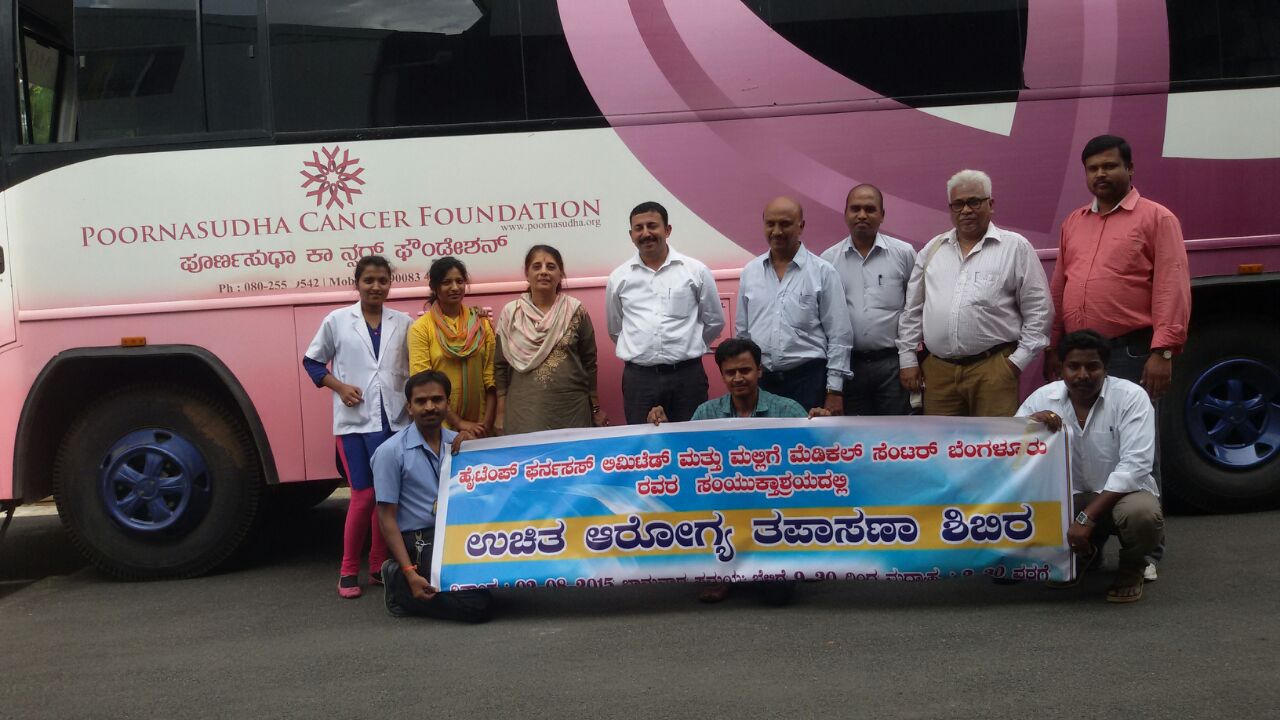
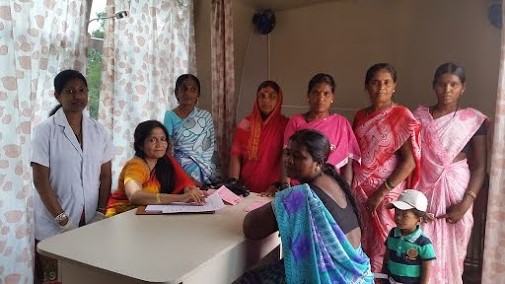
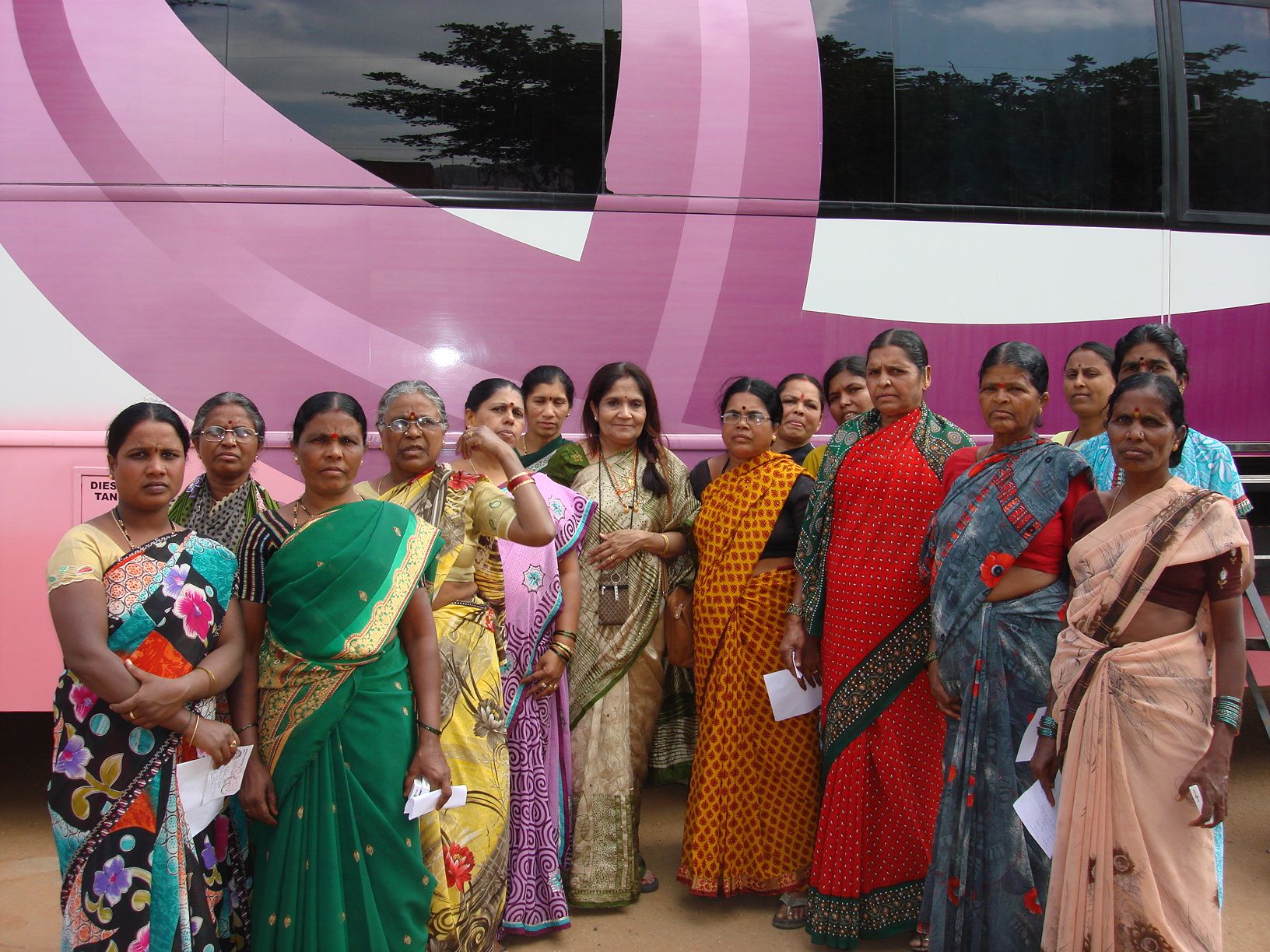
Though the state government did not  invest any money in this idea, they fully supported it, and it would incidentally reflect well for the state. She also spent time finding a skeleton staff: someone reliable to drive the bus,to schedule the screenings and educate the women in the villages of the process prior to the arrival of the bus. Even the colors and beautiful designs on the bus were personally decided by Poornima. The name of the organization created is painted on the back and sides of the bus: Poornasudha  Cancer Foundation.The bus is called the MOM express.(Mobile On-site Mammography) Here are some pictures of the bus and inside it where the cancer screener is visible. (The lady in blue is Poornima along with her husband, the oncologist, Dr Sudindra.)

It is extremely important to initially have camps to educate the women and give them the opportunity to come forward to be ready to talk and learn about breast self-exams, and then taking the bus  allows them to get  screened. Poornima sensed this early enough and planned the sequence of events, awareness camps followed by actual screening. (The women were given laminated Self Breast exam handouts in several languages.)She also educated herself by visiting the American Cancer Society and learning about the various levels of screening ,detection and stages of cancer.poorn1poorn2_0165

Four years ago this foundation was a thought in her head, today the bus goes through Karnataka and other neighboring states in India and has done over three thousand screenings. Every year the couple leaves USA and comes to India twice to oversee the project. The local paper where they live in New Jersey* has carried a feature about their work and so has the Times of India edition in South India.**

By 2015 the number of screenings have increased dramatically. They have now reached five thousand screenings! Here are some more recent pictures of the MOM express camps in Karnataka, India. The Poornasudha Foundation is a tax-deductible  501(c) 3 organization. Checks may be made out to :Poorna Sudha Cancer Foundation and mailed to:

Poorna Sudha Cancer Foundation
2821 Autumncrest Drive
Vineland, NJ 08361
email : nimasudhindra@gmail.com

I am humbled  and awed to see their continued dedication.

*http://www.courierpostonline.com/story/life/2015/01/04/couple-give-gift-support-women-cancer/21253881/

**Times of India Article – Oct 13, 2014

Mom Express Camp pic 1 Aug 2, 2015mom express pic copyDSC05550

Science makes sense Week1: On Inductive, deductive reasoning, Ernie and Bert and other things

August 24, 2015

A big hello and welcome to all my science, math students, especially to the MSTQE group! Anybody who is intrigued by/ enjoys / wants to know more about science are also welcome here. Please comment and share your ideas. I am just a facilitator who wants passion and energy to flow here. I will make connections with different branches of science, include social justice issues, activities for teachers and nuggets of information. I hope teachers of science in middle school gain confidence and love for science to impart it to their students.

I am reading a very informative book called ” The Story of Science” by Susan Wise Bauer, which she says she is writing for people who are not into science. Personally I think all of us in the scientific field can enjoy her historical travels. She traces the history of science (when she says science she definitely includes math which I consider to be the queen of sciences) from several centuries BC to the present century. I will focus on her discussion of deductive and inductive methodology.

From the time of Aristotle ( 300 BC) deductive reasoning was well known.Deductive reasoning starts from general statements to specific conclusions. You start with a premise and come to a conclusion.   No experimentation was done to get to the conclusions.  The Aristotelean method survived for centuries. (This is similar to the hypothesis that students start with in a science fair experiment.) Many centuries later,( almost nineteen centuries later)  during the time of Queen Elizabeth I (1612), Francis Bacon who had served in her court started thinking a little differently. He felt that deductive reasoning could distort evidence. You could play around with the evidence to suit your hypothesis. He was of the opinion that inductive reasoning would lead to more useful information. You start from specifics, work on experimentation and then come to a general conclusion. So you may have a hypothesis at the beginning ( not at the end like Aristotle) do some experiments and then come to a conclusion. This is what we call a scientific method.  The concept of experimentation  to prove something started in the Western world with Francis Bacon.

This was continued by William Harvey who, through dissection of the human and animal bodies proved how blood circulated in the body. Again, Copernicus proved through his mathematical observations that the sun, not the earth was the center of our universe. Deductive reasoning was being replaced slowly by inductive reasoning.Remember, all these pioneers had to fight against popularly held ideas that followed deductive reasoning and were ridiculed  for their innovations.

Think about the invention of the wheel by early man( or woman?). Perhaps a piece of stone with corners was used first. Perhaps with more and more corners, the movement of the stone along a pathway improved and with time people realized that a structure with no corners or infinite corners , in other words a circular object, works best as a wheel. ( There used to be a remarkable episode with Ernie of Sesame Street philosophizing about the shape of a circle. Ernie says to Bert, ”  You think a circle has no corners or maybe, just maybe it has infinite corners?!”) Another amazing early case of inductive reasoning.

Following Francis Bacon’s inductive reasoning, we have Robert Boyle in England,  a little later in the seventeenth century, who started working with elaborate pieces of equipment to find relationships between pressure and volume of gases . So the place where he did his experiments was called elaboratories. The word laboratory, or short form ‘lab’ is derived from this word just  four centuries ago.

It is important to note that deductive reasoning is still applied in philosophy, social sciences and even sometimes in science,especially in mathematics, but inductive reasoning is a valuable additional tool for scientists.

Activity for middle school teachers: Check what the language arts teacher/ social studies teacher is covering in his/her class. If the subject is Shakespeare, or anything to do with Queen Elizabeth the first, then bring in seventeenth century Francis Bacon etc to compare inductive and deductive reasoning.

Nuggets of information: On August 17,1835, the tool we use a lot, a wrench, was patented.

The Chemist Hazel Gladys Bishop was born on August 17, 1906. She designed the first long lasting lipstick!

lab in 17th centurylab1

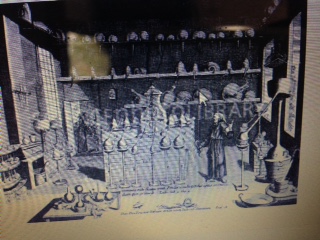
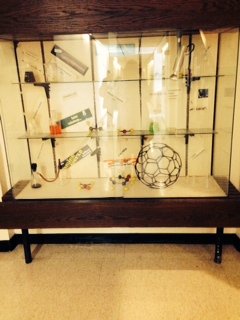
Here is a picture of a laboratory or elaboratory from the seventeenth century; the picture next to it is from the Chemistry Department of Northeastern Illinois University, showing present day laboratory equipment.

References:

Bauer, Susan Wise, The Story of Science, ( W. W. Norton and Company 2015)

https://duckduckgo.com/?q=images+of+laboratories+from+the+seventeenth+century&ia=images

http://www.science20.com/the_science_of_motherhood/this_day_in_science_history_august_17th

The 606 trail in Chicago

August 12, 2015

Recently, 606 1I managed to get a week to spend in the Humboldt Park area in Chicago. I  decided to walk every morning on a newly opened trail near the house. It is called the 606 trail in honor of the zip codes it services. This is a 2.7 mile strip covering parts  of Logan Square, Wicker Park, Buck Town and Humboldt Park areas, an east – west stretching trail  skirting Bloomingdale all the way from Ashland to Ridgeway.  I think it is also called the Bloomingdale Trail.

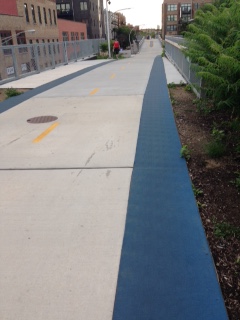
Every morning, I would get up and leave the house around 7am, catching the trail near Armitage. Almost every quarter mile there is an entrance/ exit ramp that allows easy access to this trail that is elevated. This was an abandoned train track that has been ingeniously constructed to serve pedestrians and runners along the blue, rubbery track and the rest left for bicyclists, young/ old parents with toddlers/ babies in strollers/ prams to run, walk or sprint.

As I walked every day for at least 3 miles, I was happy to note the diversity of traffic, young, old and different races. some would acknowledge my presence with a nod, smile or a ‘Good morning’. Apparently, when the trail was opened earlier this year in June, mobile art work was displayed and there is a plan to create more exciting projects for children soon. I observed that the west side of the trail has been well crafted with trees and shrubs and the work is slowly moving eastwards.606 5As I walked along I managed to see murals down below that adds color and beauty to this scene as well.606 7606 8This tr606 4ail has taken many years to finally come to fruition thanks to the generous contributions from people who come from different parts of the world who live here and love Chicago.  Every 0.1 mile there is a mile marker and at the end, middle and end, a lovely design indicating the four directions is also imprinted on the trail, a neat way for all of us to know how many miles we have traversed.

New York was one of the first to take a strip of abandoned railroad track area to convert it into a walking/ jogging/ exercising space for urbanites. They have also added little shops and have a wider space available even though the length is shorter.

Urban dwellers in Chicago deserve a quiet peaceful area for walks and exercise; those of us who live in the suburbs are very fortunate to have wide open spaces for recreation and hikes. The 606 is a boon for all that, plus an understanding to live in harmony with nature and learn about the various perennials planted along the trail and to acquaint one with the varying neighborhoods and its diversity  I wish this trail is not just a haven for the yuppies and the space is democratically shared by all in the Chicago land area.

writer’s block, too much stress or excuses?

July 20, 2015

It has been a crazy year for me to put it mildly. I will focus on the physical madness of moving. Two years back, my husband wrote a soulful email ( and I am supposed to be the writer in this house!) urging me to forget living in Illinois and move to Florida. I was in sunny India then and he was struggling with the brutal winter in Northern Illinois, getting to work and back each day.

I had been fighting against leaving this state. I had wonderful friends, loved the diversity, the beauty and the character of Chicago. How could I leave? And then we had this amazing garden for which I planned in early February, buying seeds and starting them under grow lights. I had my younger son , daughter-in-law and his two adorable children. Leave all this? But the pleading, persuasive tone won me over. ( He was always good at it.) I said yes, but was skeptical.  He took me to Tampa and I loved the downtown area. Having lived in the suburbs of Illinois, I was determined not to do that again and said I would move, provided we lived very close to the city of Tampa.  We found a place and bought it right next to the bay last year.

Then the downsizing, throwing out, cleaning the suburban house in Illinois started. I was eager not to give everything to Goodwill, but called different organizations to see who would take my books, my ethnic clothes , my long playing records etc. From October of last year till April of this year, we worked like crazy getting rid of/ packing/ arranging thirty-five years of memories in a house.

All this led to stress, arguing, long hours and I did not touch my writing. I had already been feeling low since I had been advised to re-write parts of my novel. I read voraciously, going to the library between bouts of cleaning. But I could not write too much. I did spend a few days here and there reworking my novel. But I needed to work on it every single day and I was avoiding that, saying to myself, ” I am stressed, I need a calm environment to focus on my writing”. Yeah, sure, when the waves stopped beating and the world stopped spinning I would be still waiting for an excuse to get back to it.

We have put our house on the market and moving back and forth from Tampa to Chicago. There are still a few items that need to be taken and some to be thrown/ given away. Now I feel I am ready to start working on my writing on a regular basis because we just have to wait for the house to be sold.

As a writer, I have always found that I just need a little time to focus everyday. But even to do that, I look for excuses not to do it! Yes, this has been a difficult year and precisely for that reason, I need to spend a little time with my writing. It breaks the monotony of cleaning, organizing and also makes me feel less guilty. This is a no-brainer. So get to it girl!

Right now, I am telling myself to just do it;no more procrastination.